
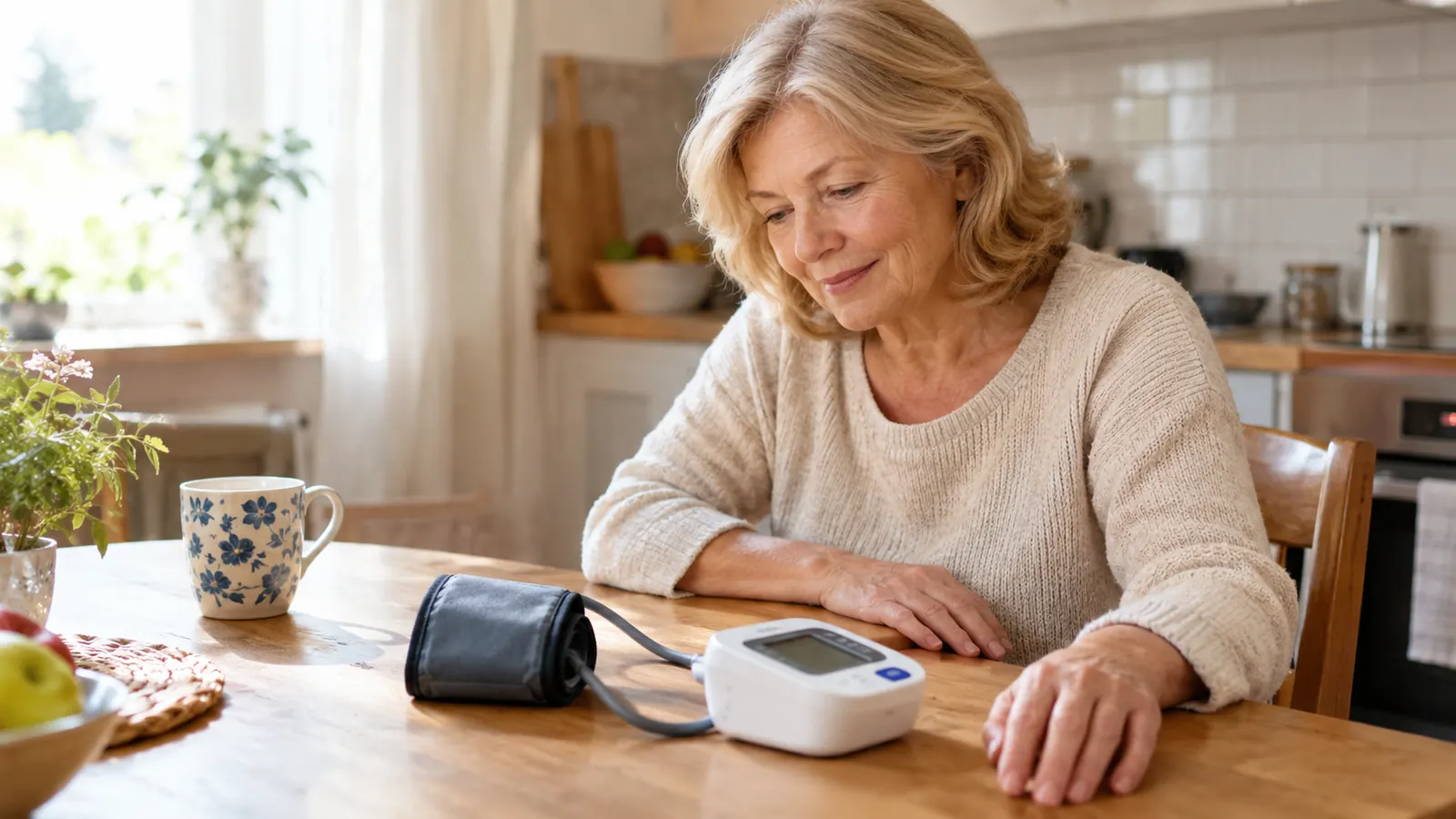
When my doctor asked me to take my blood pressure at home twice a day, I figured it would be simple: strap on the cuff, press the button, write down the numbers. Two years later, with my Omron Bronze upper arm monitor in its usual spot on the kitchen table, I can tell you the machine is the easy part. The harder part is everything you do before you press start.
The first week, my readings bounced around so much I did not trust any of them. Some of that was the monitor. Most of it was me. I was taking readings right after coffee, with my arm propped on the armrest of the couch, in a hurry, talking to Walt while the cuff squeezed. It took one honest conversation with my doctor to straighten me out. She did not lecture me. She just asked how I was sitting, when I was taking readings, and whether I had been still for five minutes first. I had not. That conversation changed my whole routine, and it is the routine I want to walk you through now.
The Upper Arm Monitor I Use for Every Reading
The Omron Bronze has been my kitchen-table monitor for about two years. It runs on four AA batteries, shows readings on a clear LCD display, and stores up to 14 readings. A Hypertension Indicator alert flags elevated readings, and the free Omron connect app keeps an unlimited record and shows trends.
Amazon Check Today's Price on Amazon →Step 1: Take It at the Same Time, in the Same Chair
My doctor asked for two readings a day, one in the morning and one in the evening. I take the morning one about ten minutes after I get up, before coffee. The evening one comes after dinner, at least an hour after my last cup of tea. Same two windows, every single day.
The chair matters more than I expected. I use the same chair at the kitchen table every time. It has a straight back and a firm seat, and my feet reach the floor flat. I do not take readings on the couch anymore, because the couch makes me slouch, and slouching changes the numbers. Pick your own version of this and write it down: same time, same chair, same arm. When the routine is identical, you are comparing the same situation day to day, and that is what makes the log meaningful.
If you can only manage one reading a day, take it in the morning. That is what my doctor told me, because mornings are when she wants to see the resting baseline. The evening reading is a bonus that shows how the day treated you. Two readings a day give a fuller picture, but one honest reading beats two rushed ones.
Step 2: Size the Cuff to Your Arm
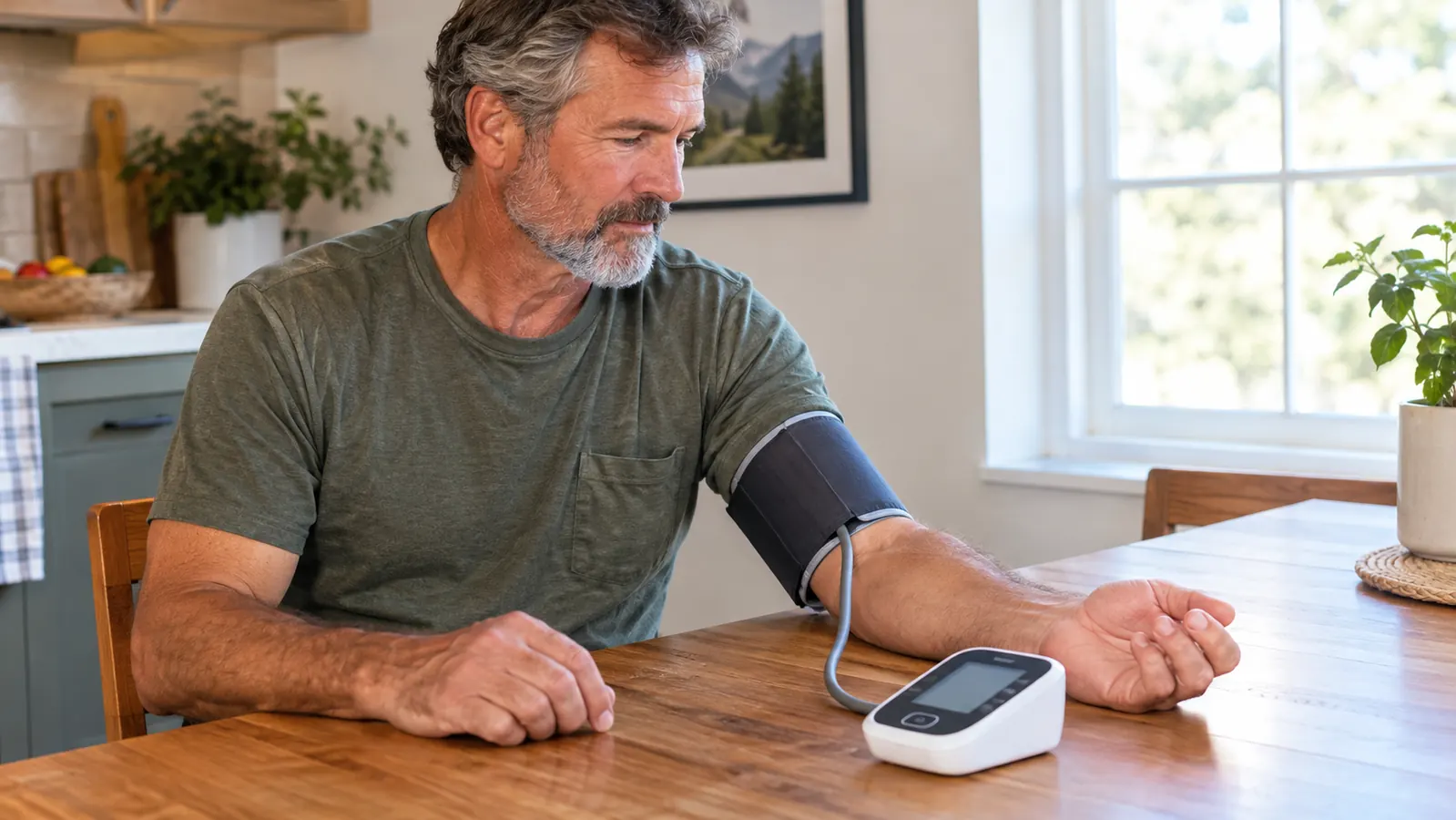
Upper arm monitors come with a cuff that has to fit you, not just sort of wrap around you. The Omron Bronze includes a cuff sized for upper arms in the 9 to 17 inch range. My arm measures about 11 inches around, so the standard cuff fits me well. Walt's upper arm is about 15 and a half inches, and he uses the Omron Large ComFit cuff on the same monitor.
Here is how you know the fit is right. The cuff should be snug but not pinching, and you should be able to slide one fingertip under the edge. If it is too loose, the monitor works harder and the reading drifts. If it is too tight, the reading runs high and your arm aches by the end. Place the cuff so the bottom edge sits about a finger's width above the crease of your elbow, with the tube running down the center of your arm toward your hand. Smooth out any wrinkles before you start.
Measure your upper arm before you buy anything, because cuff size is the most common reason home readings go wrong. A soft measuring tape around the thickest part of the upper arm is all you need. If your arm falls outside the range of the included cuff, look for the right size cuff for the same monitor before you give up on it.
Step 3: Sit Still for Five Quiet Minutes First
This is the step I skipped for the first week, and it is the one that changed everything. Sit in your chair, feet flat, back against the chair, and rest your arm on the table at heart level. Then do nothing for five minutes. No phone, no book, no conversation. I watch the clock on the wall and let my shoulders come down.
Why does this matter? Because your blood pressure changes with everything around you. Walking in from the car, a phone call, a disagreement, even sitting up from the couch. Five quiet minutes lets your body settle into its resting state, so the reading reflects your actual blood pressure, not the last ten minutes of your life.
When the five minutes are up, keep your arm loose and do not talk while the cuff inflates. Talking can nudge a reading up, so I stay quiet until the numbers appear on the LCD display.
If five minutes feels like a long time, start with two and build up. The point is to be still long enough for your pulse to settle. Within a week, the quiet part of my morning became the part I looked forward to. It is the only five minutes of the day where I am not doing anything at all.
Step 4: Rest Your Arm at Heart Level and Stay Still
Position matters more than most people think. Sit with your back against the chair, feet flat on the floor, and do not cross your legs. Rest your forearm on the table so the cuff sits at the same height as your heart. If your arm hangs down at your side, the reading runs higher than it should. If you prop it up too high, the reading runs lower. The table does the work of holding your arm up, so you do not have to.
Palm up, arm relaxed, and stay completely still during the measurement. I do not grip the edge of the table or clench my fist. I do not hum or count in my head. The whole measurement takes less than a minute, and stillness gets easier the more you do it.
If the room is cold, the reading can run higher, because your body is working to stay warm. I keep the kitchen at a comfortable temperature and I do not take readings in a draft. Small comforts like that made the habit easier to keep, and keeping the habit is the whole point.
Step 5: Record Every Reading, Right Away
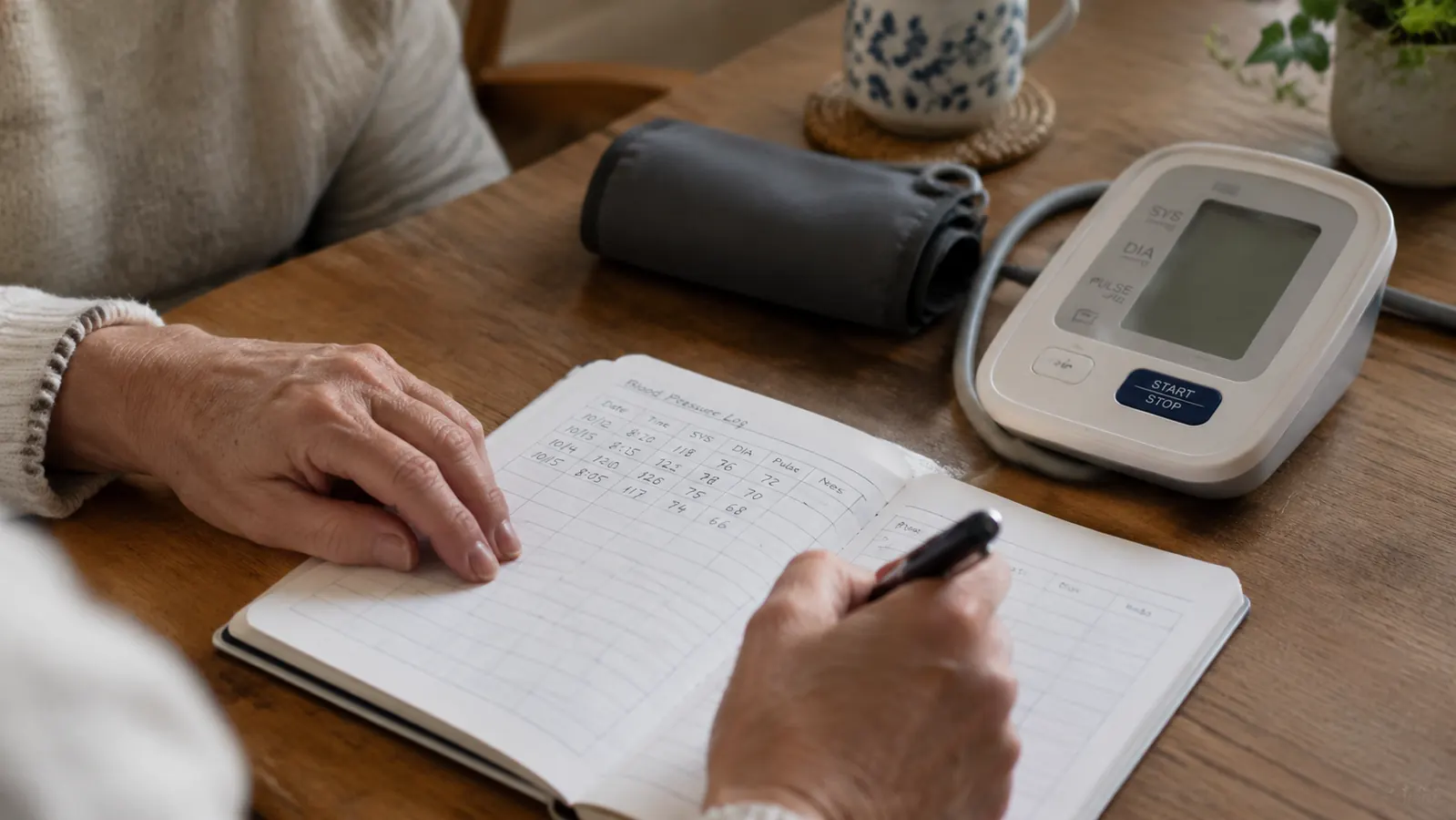
A reading is only useful if you can see what it means over time. I write mine in a paper log book that lives in the kitchen drawer: date, time, both numbers, pulse, and a short note about anything unusual, like a poor night of sleep or a stressful morning. Walt writes his in the same book, one row below mine, so we do not mix up our numbers.
The Omron Bronze keeps up to 14 readings in its own memory, which is handy when the paper log is out of reach. The free Omron connect app goes further. It stores unlimited readings and shows trends, so you can see the pattern without flipping through pages.
Bring the log to every appointment. My doctor reads mine like a report card, and the conversation is much more useful when she can see three weeks of mornings and evenings instead of one number from a pharmacy machine. I am not a doctor, so I will say this plainly: your doctor is the one who interprets your numbers and decides what to do about them. My job is just to bring her an honest record.
If you are the sort of person who would rather not keep paper, the Omron connect app is a good home for your record. It stores unlimited readings and shows trends, which is exactly what a doctor wants to see. I still keep the paper book because I like writing it down, but the app is a fine place for your log if that suits you better.
What Else Helps
A few small things make the whole routine easier. I take the morning reading before coffee, because caffeine can nudge a reading up. I empty my bladder first, because a full one can too. I do not take a reading right after exercise or a hot shower. None of this is my advice to you. It is what my doctor suggested to me, and it is worth asking your own doctor what they want you to do before you start taking home readings.
The Hypertension Indicator on the Bronze flags a reading when it is elevated. I do not treat that flag as a diagnosis. I note it in the log, and my doctor explains what it means at the next visit. If you want the same feature, look for it on the listing, because not every monitor has it.
Once in a while I take a reading on my other monitor, the Withings BPM Connect, and compare it with the Bronze. They usually agree, and that little check keeps my confidence in the routine high. You do not need two monitors to do any of this. One good upper arm monitor and a steady habit are plenty.
The Bronze runs on four AA batteries, and I keep a spare set in the kitchen drawer. When the batteries go, the monitor simply stops, and I would rather have the spare ready than miss a reading.
If you travel, keep the routine going. I keep a wrist monitor in my travel bag for trips to see my daughter in San Antonio, because it packs easily, and I take readings in the hotel room the same way I do at home. When I am home, the upper arm monitor on the kitchen table is the one I trust for the daily routine.
The Mistakes I Made So You Do Not Have To
For the first week I took readings on whichever arm felt convenient, sometimes left, sometimes right. My doctor told me to pick one arm and stick with it, because the two sides can read slightly differently. I use my left arm every time now, and I write 'left arm' in the log so there is no confusion.
I also used to retake the reading immediately when I did not like the number, hoping for a better one. That is a trap. The monitor is not wrong just because the number is not what you wanted. If you are going to take a second reading, wait a minute or two, sit still again, and then decide whether to record the second one. I record both and let my doctor see the whole picture.
The biggest mistake was expecting the monitor to fix anything. It does not. It measures. It tells you what your blood pressure is at that moment, under those conditions. Lowering it, or managing it, or deciding what it means, that is a conversation for your doctor. The monitor is just the honest witness.
A Few Things I Wish I'd Known Sooner
The first reading of the day is rarely your best or your worst. It is just one point on a line, and the line is what matters. I stopped worrying about any single number a long time ago, and I started paying attention to the pattern across two weeks. That shift made the whole habit calmer and more useful.
The other thing I learned is that the monitor does not have to be fancy to be good. The Bronze is a straightforward upper arm monitor. It runs on four AA batteries, shows a clear LCD reading, and remembers the last 14 readings. That is plenty for a morning and evening habit.
Give the habit a full month before you judge it. The first week is mostly learning where the cuff goes and remembering to sit still. By the second week it is automatic. By the fourth week, you have a page of readings that actually means something, and that is when the log starts to earn its keep.
Same chair, same time of day, same arm, five quiet minutes first. That routine did more for my readings than any monitor feature I could name.
Start With a Monitor You Trust, Then Trust the Routine
The Omron Bronze has been a steady part of my mornings for about two years. It runs on four AA batteries, stores up to 14 readings, and works with the free Omron connect app for unlimited history and trends. If you are shopping for an upper arm monitor, check today's price on Amazon. Then sit down, take five quiet minutes, and start your own log.
Amazon Check Today's Price on Amazon →