

For months, the Omron Bronze sat on our kitchen table before Walt touched it. He would pour his coffee, glance at the monitor, and say the same thing: 'I'm fine.' Then one morning about a year and a half ago, he sat down in my chair, rolled up his sleeve, and asked me to show him how it worked.
I didn't push. I just showed him. Sit down, feet flat, arm resting on the table at heart level, five quiet minutes first. He laughed at the five quiet minutes part. He's not a sit-still person. But he did it.
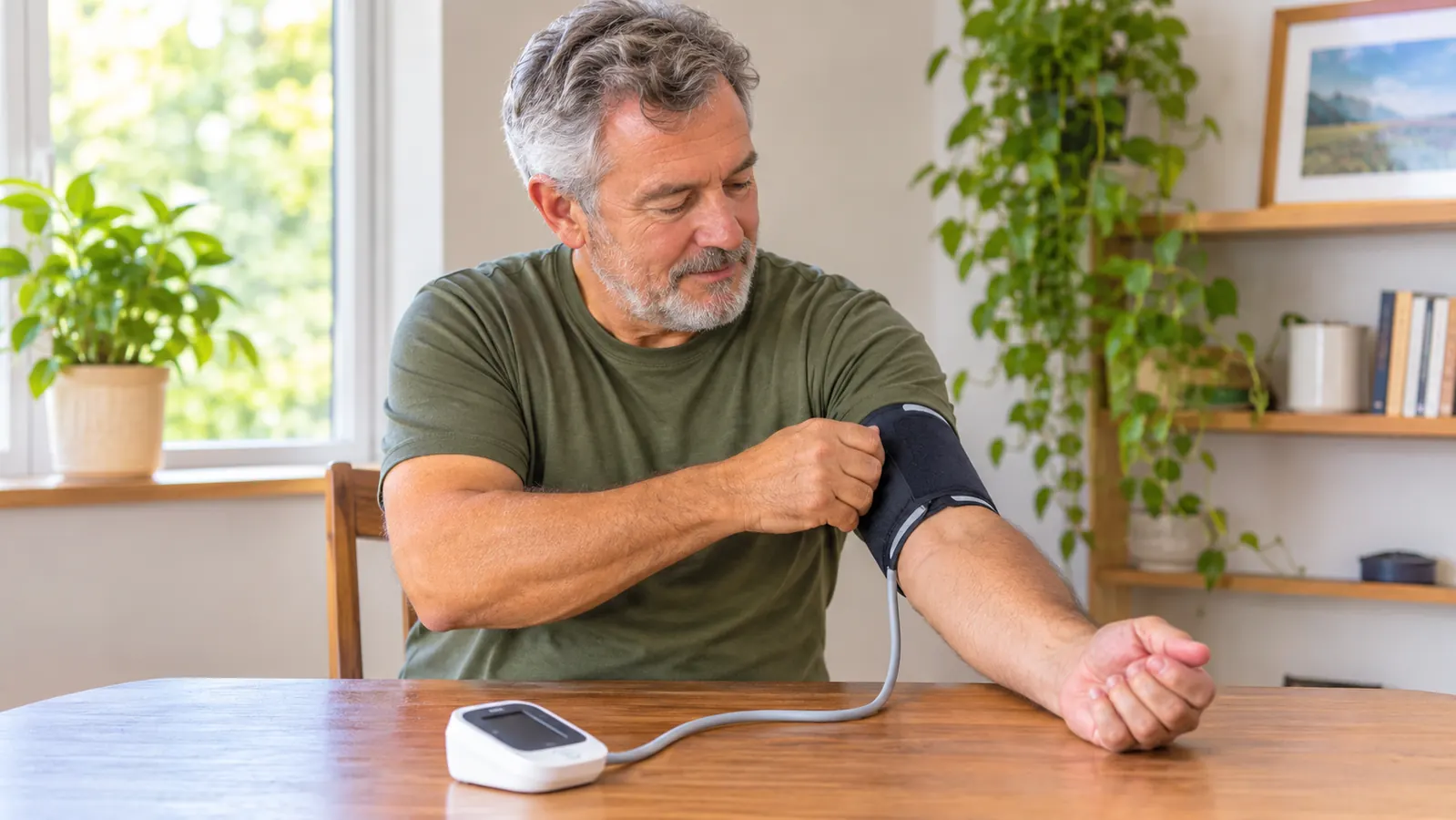
The cuff tightened around his arm, the LCD display lit up, and the numbers appeared. He looked at them, then at me. 'That's it?' he said. 'That's it.' The whole thing took less than a minute.
The Omron Bronze uses Advanced Accuracy Technology, which is a fancy way of saying it takes a reading you can trust. It also has a hypertension indicator alert that lights up when a reading is elevated, and it stores up to 14 readings in memory. I had been using it every morning for about six months by then, ever since my doctor asked me to take readings at home and bring in a log.
Walt's doctor had said something similar at his own checkup. Nothing alarming, just a suggestion to keep an eye on things. He came home and told me about it, and I pointed at the chair. 'The chair is yours whenever you want it.'
For the first week, he only used it when I reminded him. Then he realized the Bronze connects to the free OMRON Connect app on my phone through Bluetooth. I had been logging my morning readings there without making a big deal of it. Once Walt saw his numbers showing up as little dots on a trend line, something clicked. He started checking every morning, right after I did.
He still won't admit he likes it, but he has barely missed a morning since.
Make It Easy to Check Your Numbers
The Omron Bronze is the monitor that finally got Walt to sit down. It's simple, it's accurate, and it sits on the counter waiting for you.
Amazon Check Today's Price on Amazon →Now we have a rhythm. I go first, Walt goes second. He makes the coffee while I sit, then we trade places. It sounds like a small thing, but for a man who spent years avoiding doctors until something hurt, it's a real change. He even reminded me to take my reading the other morning, which is a first. We don't make a big deal of it. We just do it.

One thing that helped was the cuff. The cuff that came with the Bronze fits both of our arms, but Walt found it fiddly to wrap by himself and kept putting it on too loose. We picked up the Omron Large ComFit cuff, and that made all the difference. He stopped fussing with the wrap and started focusing on the numbers.
We keep the paper log book in the kitchen drawer. Every morning, whoever goes first writes down the date, time, both numbers, pulse, and a short note. Walt writes 'coffee first' on the days he forgets to wait. He has started writing his own notes now: 'forgot to wait' or 'walked before breakfast.' It's not scientific, but it helps us remember what was different on the days the numbers move.
I want to be clear about something. The monitor measures. It doesn't treat. Neither of us has ever assumed that a good reading means we can skip the doctor. The hypertension indicator alert is a small thing, but it's helpful. If a reading is elevated, a light comes on next to the numbers. It doesn't tell you what to do, just that you might want to mention it to your doctor. We bring our logs to every appointment and let our doctor do the interpreting. That's the deal we made when we started, and it's the only sensible way to use one of these.
The Bronze is small and light, about 1.2 pounds, and it runs on four AA batteries. It takes up almost no room on the table, which matters when the table is also where we eat breakfast. Walt still uses the Bronze most mornings. I still use it every morning too, and I use the Withings monitor most evenings because I like having those readings sync automatically. Sometimes I take one reading on each, just to compare. They're usually close. That's the kind of thing that builds trust in a habit.
What I'd Tell You If We Were Sitting at My Kitchen Table
Find a chair you use every day. Put the monitor somewhere you'll see it, not in a drawer. Sit the same way every time: feet flat, arm resting on the table at heart level, five quiet minutes first. Take your readings at the same times, morning and evening if you can. Write them down, even if it's just a few words in a notebook. And whatever the numbers say, don't panic and don't celebrate. One high reading is not a diagnosis, and one low reading is not a cure. Bring the log to your doctor and let them tell you what it means. A monitor is a tool, not a verdict.
Start With the Omron Bronze
If you're ready to make checking your numbers a habit, the Omron Bronze is a good place to start. It's the one that got Walt to sit down.
Amazon Check Today's Price on Amazon →