
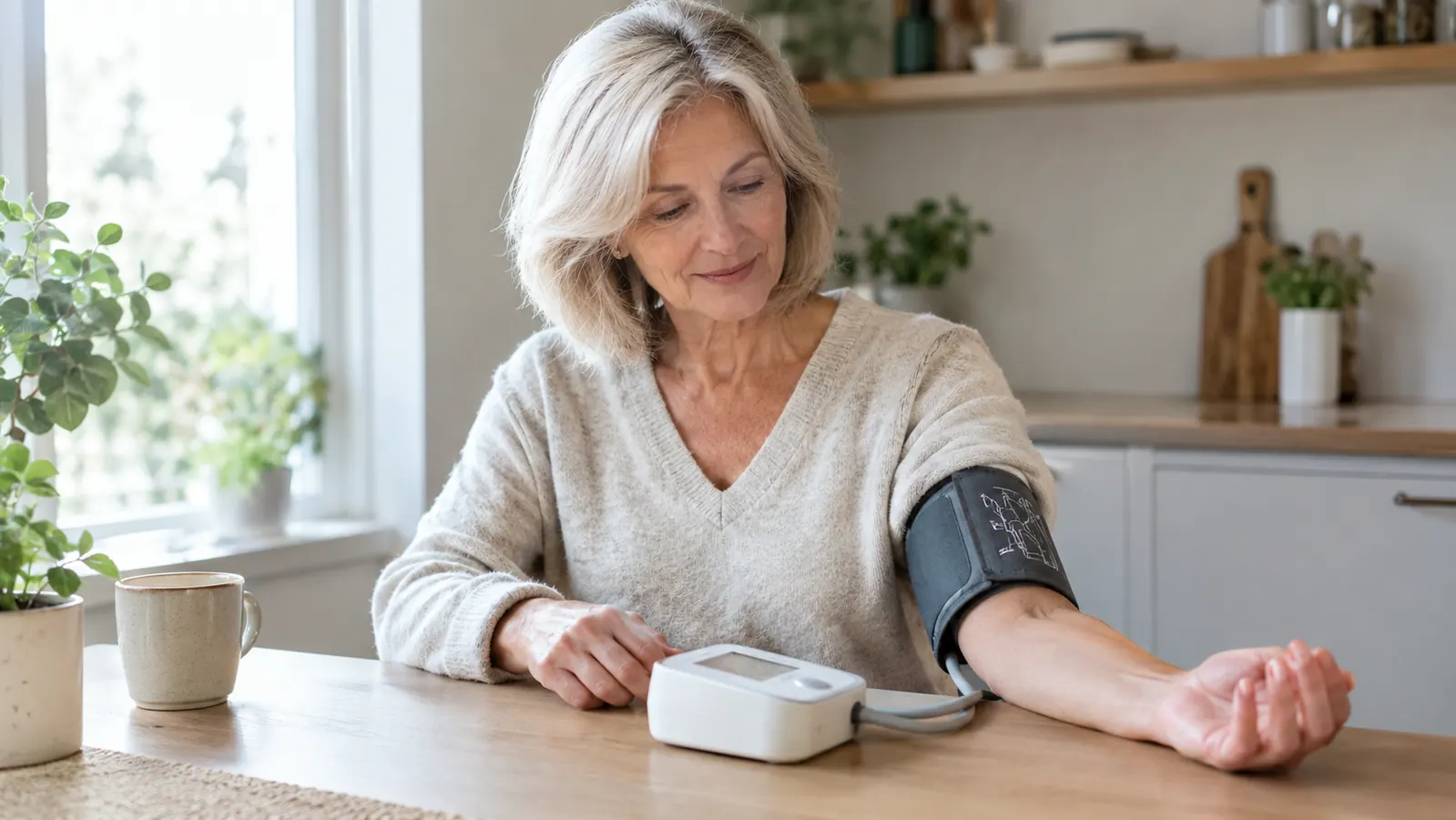
If you are trying to decide between the Withings BPM Connect and the Omron Evolv, the short answer is this: the Withings is the one I reach for most evenings, and the Evolv is the one I would seriously consider if I wanted a bigger screen and did not care about phone syncing. I have used the Withings BPM Connect daily for about a year, and I have followed the Evolv's published specs closely enough to tell you exactly where each one earns its place.
A little context first. I started checking my blood pressure at home about two and a half years ago after a routine checkup showed readings higher than my doctor liked. My doctor asked me to take readings twice a day for a few weeks and bring a log. I bought an Omron Bronze upper-arm monitor and used it at the kitchen table every morning and evening. It worked fine, but I had to write each reading in a notebook by hand. About a year ago I bought the Withings BPM Connect so the evening reading would sync to my phone automatically. I still use the Bronze most mornings and the Withings most evenings, and sometimes I take one reading on each to compare.
| Withings BPM Connect | Omron Evolv | |
|---|---|---|
| Sync | Wi-Fi and Bluetooth, syncs automatically to the Health Mate app | Bluetooth to the Omron Connect app, no Wi-Fi option |
| Display | LCD with color-coded feedback on the display case | Large backlit display with a color-coded risk indicator |
| Cuff fit | Fits arms 22-42 cm; my 11-inch arm fits fine | Standard cuff that fits most adult arms, per the maker |
| Power | Battery powered, comes with a charger | Battery powered, standard AA batteries |
| Warranty | 2 year manufacturer warranty | Standard 3 year manufacturer warranty, per the maker |
| Best for | People who want readings in a phone log automatically | People who want a clear on-device display and no app |
Where Withings Wins
The Withings BPM Connect wins on the part of the routine that actually changed my habit: the sync. I take a reading at the kitchen table in the morning and most evenings, and I do not have to write anything down to have it in the Health Mate app. The monitor is battery powered, comes with a charger, and syncs over Wi-Fi and Bluetooth. I set it on the table, take my reading, and the number is in the app before I have put the cuff back in the drawer.
The first evening I used it, I took a reading with the Withings and then, two minutes later, a reading with the Bronze on the same arm, same chair, same position. They agreed closely enough that I trusted the new monitor immediately. I did the same thing a week later on a Tuesday morning before Walt was up, and the two were still within a few points of each other. I am not a doctor and I do not interpret numbers, but I know what a consistent comparison looks like, and that was it.
The cuff fits arms 22 to 42 centimeters. My own arm measures about 11 inches, which is right in the middle of that range, and Walt's upper arm is about 15 and a half inches, so he can use it too when he borrows it. At 12.8 ounces and about 6.1 inches long, it is light enough to keep on the table between uses, and the stainless steel case feels like something that will still be working in five years. The LCD display gives color-coded feedback on the display case, so I can see at a glance where my reading falls without hunting for a number in a paragraph.
It is also FDA cleared, which mattered to me because I wanted a monitor that met a real standard, not just a gadget with good reviews. The battery lasts a long time, and the included charger lives in the kitchen drawer next to my paper log, so I always know where it is. That sounds like a small thing, but when you are building a twice-a-day habit, small things are the whole game.
I also like that the Withings does not care whether I remember to open the app. The sync happens in the background, over Wi-Fi or Bluetooth, and the Health Mate app sorts the readings by date and time. On the first of the month I can scroll back and see the whole month without flipping pages. I still keep the paper log because my doctor likes seeing it, but I have stopped dreading the transcription. That alone was worth the switch.
One more thing that surprised me: the monitor is quiet about its work. There is no beeping that carries across the house, no light that stays on and bothers Walt at night. It sits on the table, does its job, and waits for the next reading. I know that sounds like a small courtesy, but when you take a reading at 6:40 in the morning, you notice the difference between a device that announces itself and one that simply works.
The dimensions help too. At 6.1 inches long and 2.36 inches wide and 2.16 inches thick, it takes up less of the table than a paperback book. I keep it next to the salt and pepper, and it does not crowd the breakfast plates. That may be the least glamorous reason to choose a monitor, but it is the reason mine is still out instead of buried in a drawer.
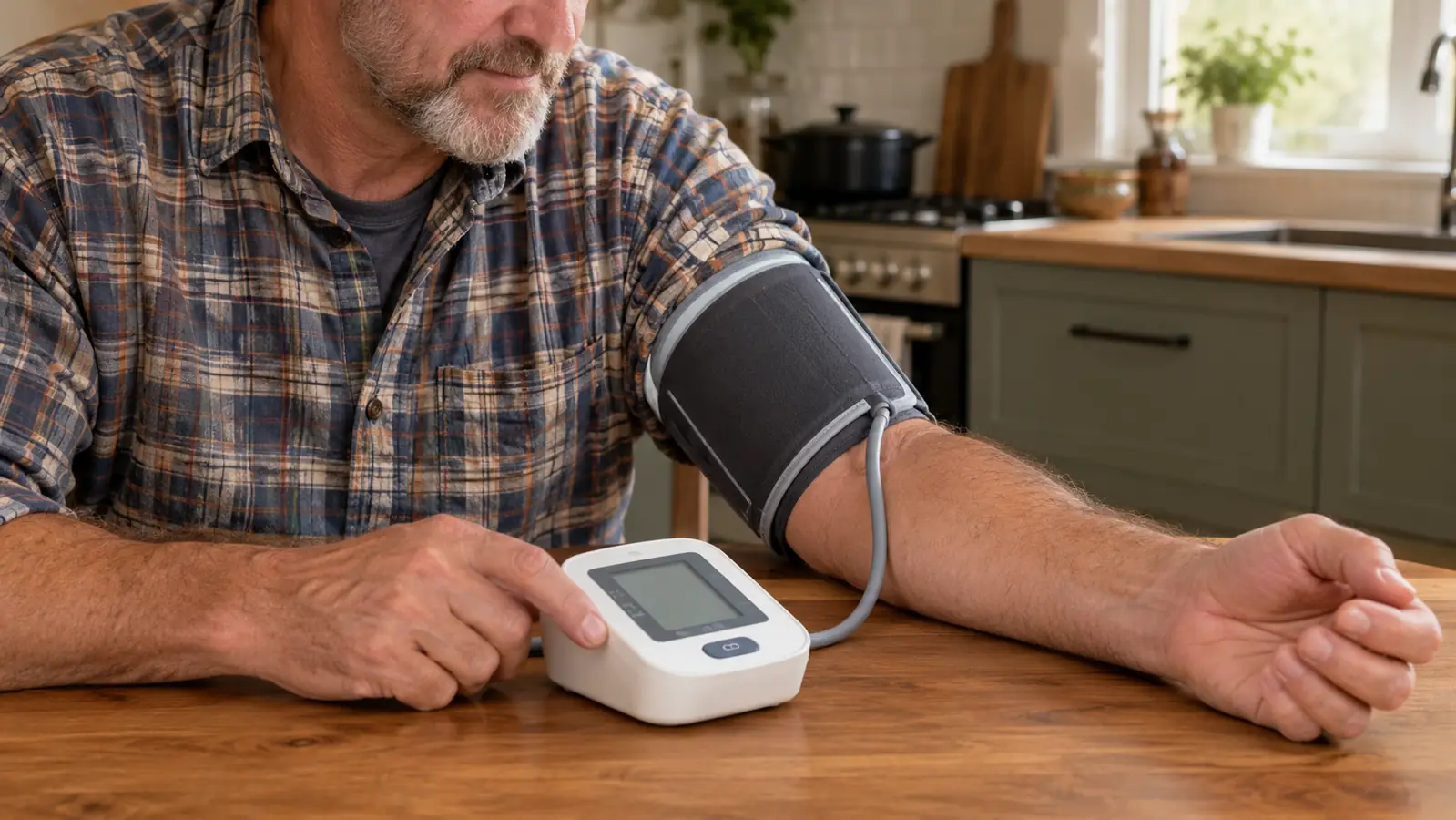
Where Omron Evolv Wins
I have not used the Omron Evolv, so I will be straight with you: everything I say about it comes from the maker's published specs, not from my own arm. What those specs describe is a monitor with a large backlit display and a color-coded risk indicator, which sounds genuinely easier to read at a glance than the Withings screen. If your eyes are anything like mine at sixty-three, a bigger display matters more than you think it will.
I noticed this the first winter I used the Bronze. The kitchen light was on, but the numbers on that small screen still took me a beat to focus. I would hold the monitor closer, then farther away, then realize I had forgotten my reading glasses on the counter. The Evolv's larger display would have solved that particular annoyance, and if I were buying a monitor today for someone who does not want an app, I would put it high on the list.
The Evolv also wins on warranty. Omron publishes a standard three-year manufacturer warranty, where Withings offers two years. That is a real difference if you are the kind of person who keeps a monitor for a decade. And the Evolv runs on standard AA batteries, which means you can replace them at any gas station instead of keeping track of a charger. I have never had to replace the battery in my Withings, but I like knowing that the Evolv would not leave me stranded.
The tradeoff, as I understand it from the published materials, is that the Evolv connects by Bluetooth to the Omron Connect app and does not offer Wi-Fi syncing. That means the reading is on your phone when you open the app, but the monitor is not pushing it there on its own. For me, that would have been a step backward, because the automatic sync is the reason I bought the Withings. But if you are happy keeping a paper log, and you want the clearest possible display on the device itself, the Evolv is a serious option.
I should also say that Omron has a long reputation in this category, and the Evolv is sold as a premium model. If you are the kind of person who wants a dedicated device that does one thing well and does not want to think about apps or accounts, that is a legitimate preference. My own system works because I enjoy looking at the trends in the app. But some people would rather write in a notebook and never open a phone.
The other thing I would weigh is the cuff. The Evolv comes with a standard cuff, and Omron sells larger cuffs separately, just as I bought the Large ComFit cuff for Walt's arm on the Bronze. If you or someone in your house has a larger upper arm, check the cuff range before you buy either monitor. A cuff that fits poorly will give you readings you cannot trust, no matter how good the screen is.
If you want your readings in a phone log without lifting a pen
The Withings BPM Connect syncs over Wi-Fi and Bluetooth to the Health Mate app, so every reading is saved automatically. I have used mine for about a year and it is the monitor I reach for most evenings.
Amazon Check Today's Price on Amazon →
Who Should Buy Which
Buy the Withings BPM Connect if you want your readings saved automatically and you like looking at trends in an app. That is the whole reason I bought mine, and it is the reason I still use it a year later. I fill in my paper log in the morning with the Bronze, and in the evening I let the Withings do the writing for me. On Sunday nights I open the Health Mate app and look at the week the way I used to look at a grade book: row by row, looking for patterns, not for perfection.
Buy the Omron Evolv if you want the clearest possible display on the device itself and you are happy keeping a paper log, which is a perfectly good system. I still keep a paper log alongside the app, and my doctor is happy with it. They never once asked for a screenshot or an export. They asked for a list of dates, times, and numbers, and a paper log does that beautifully. If that describes you, you do not need Wi-Fi, and you should not pay for it.
Think about who else will use the monitor. Walt borrows mine now and then, and he has his own large cuff for the Bronze because his arm measures about 15 and a half inches. If a monitor is going to live on one table and serve two people, cuff range and ease of reading matter more than the app. If it is going to travel, the Withings is small and light, but the Evolv's AA batteries would be easier to replace on the road. My travel monitor is actually the Omron Gold wrist unit I keep in my bag for trips to see our daughter in San Antonio, though the Withings sometimes comes along when Walt travels with me.
Either way, the monitor is only half the routine. My own routine is the same chair, feet flat, arm resting on the table at heart level, after five quiet minutes, at the same times each day. Then I bring the log to my doctor and let them interpret the numbers. A monitor measures; it never treats. That part is up to your doctor.
If you are still deciding, try this. Picture your kitchen table at 7 in the morning and at 9 at night. Which monitor would you actually use? For me, the answer was the one that saved the reading without asking me to do anything. For you, it might be the one with the biggest, clearest numbers. Both are honest answers, and both are better than buying nothing and guessing.
If you are buying for someone else, think about their hands and their eyes before you think about the app. A person who never carries a phone around the house will not use a phone-dependent routine. A person who squints at small screens will want the biggest display they can find. There is no wrong answer here, only the wrong match.
The monitor that made my evening readings automatic
The Withings BPM Connect has been my evening monitor for about a year. It syncs over Wi-Fi and Bluetooth, the cuff fits my arm, and the color-coded display is easy to read at the kitchen table.
Amazon Check Today's Price on Amazon →