
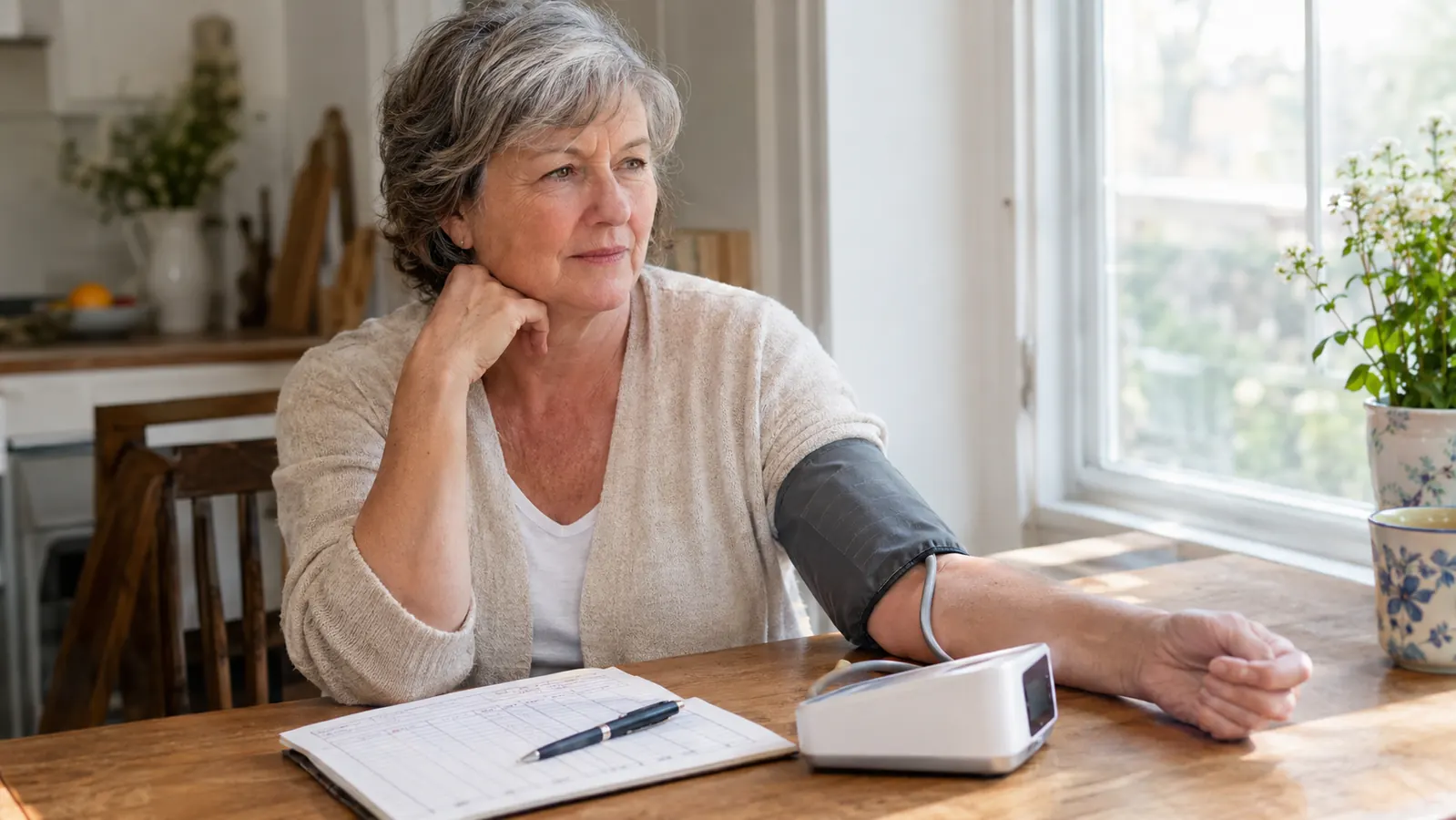
The hardest part of home blood pressure monitoring was never taking the reading. It was walking into my doctor's office with a messy spiral notebook full of numbers and watching her squint at the page. My doctor is the one who asked me to track my blood pressure at home in the first place, and for the first few weeks I did exactly what she asked. I just did it in a way that made the whole thing harder than it needed to be, for both of us.
I am Ruth Pembrook, and I have been taking readings at home for about two and a half years now, after a routine checkup showed numbers higher than my doctor liked. I am not a doctor or a nurse. I am a retired librarian who got told to bring in a log, and then had to figure out how to make that log actually useful. Along the way I found a system that works: a consistent routine, a monitor I trust (the Withings BPM Connect, which I use most evenings), and a clean record my doctor can read in ten seconds. That is what I want to walk you through today.
Start with a monitor that saves you from transcription errors
The Withings BPM Connect is the upper-arm monitor I use most evenings. It measures systolic and diastolic pressure, shows color-coded feedback on the display, and syncs to the Health Mate app over Wi-Fi or Bluetooth, so the numbers land in the log by themselves. That is one less place for a mistake to hide.
Amazon Check Today's Price on Amazon →Step 1: Take the reading the same way every single time
A blood pressure reading is only useful if it is taken the same way every time, because your doctor is comparing your home numbers to each other and to the readings taken in the clinic. If one morning you take it right after coffee and the next morning you take it before you have had anything, the difference in the numbers is not your blood pressure changing. It is the method changing. My doctor explained it to me this way: she wants to see what my blood pressure does on a normal day, not what it does after I have been rushing around the house.
My routine is boring on purpose. I sit in the same chair at the kitchen table, feet flat on the floor, back supported, arm resting on the table so the cuff sits at heart level. I sit quietly for five minutes first. I do not talk, I do not scroll through my phone, I do not start the reading while I am still catching my breath from carrying in the groceries. I take it at about the same time each morning and each evening, and I write down the date, the time, both numbers, and my pulse in my paper log. One morning last spring I took a reading right after a frustrating phone call with the bank, and the number came back noticeably higher than my usual morning reading. I wrote 'upset about bank call' in the note column, and at my next appointment my doctor said that note was more useful than the number itself, because it explained the spike instead of leaving her to guess.
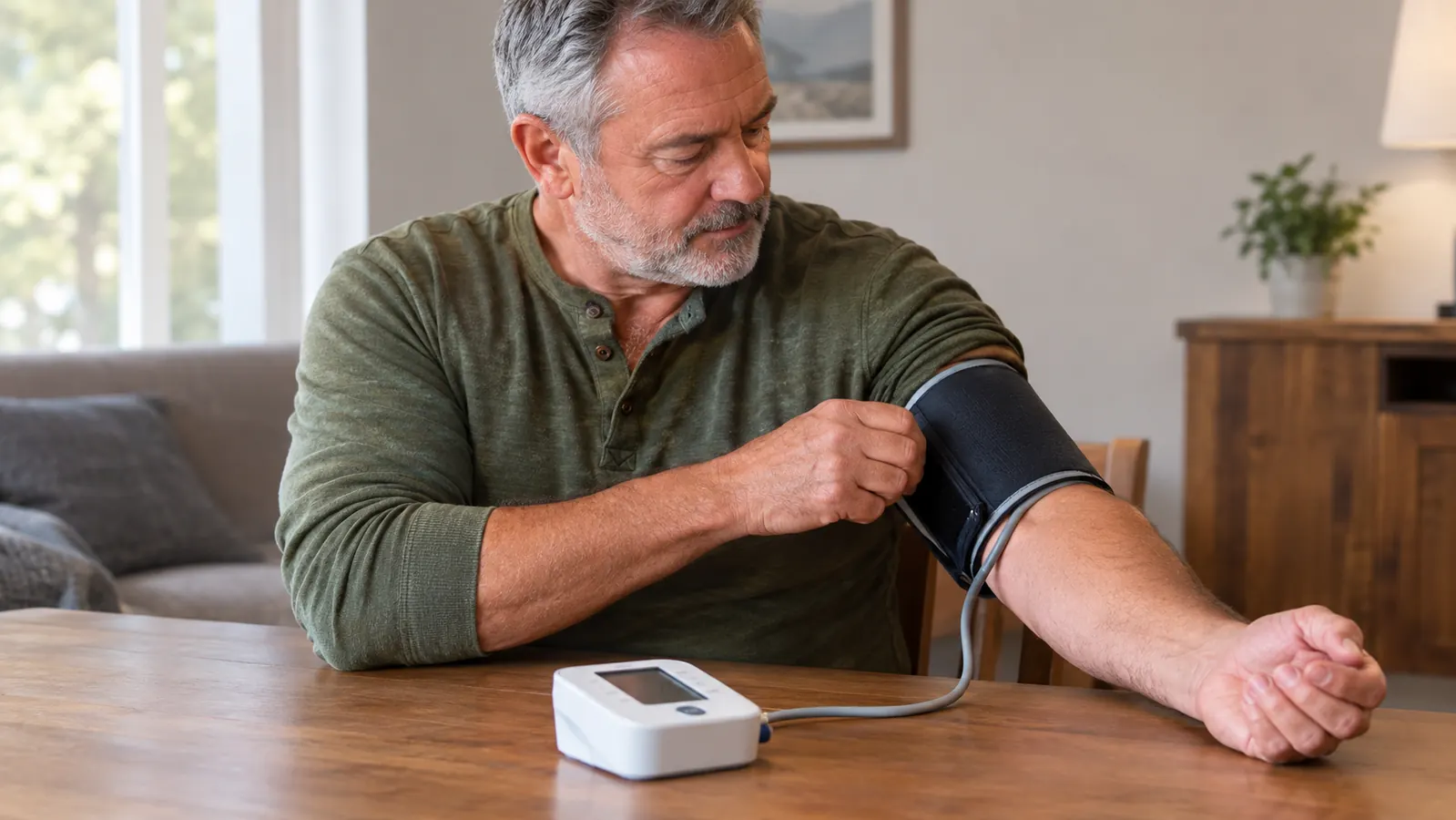
The cuff matters more than people expect. The Withings BPM Connect fits arms from 22 to 42 cm, and the band size is printed right on the box. I check that the cuff is snug but not tight, about the same firmness as a well-fitting sleeve. If the cuff is loose, the monitor has to work harder and the reading can come out wrong. If it is too tight, you are squeezing the arm and that changes the number too. When I bought this monitor, the fit was one of the reasons I chose it, because my own arm is about 11 inches around and the band fits me comfortably.
Step 2: Keep a log your doctor can actually read
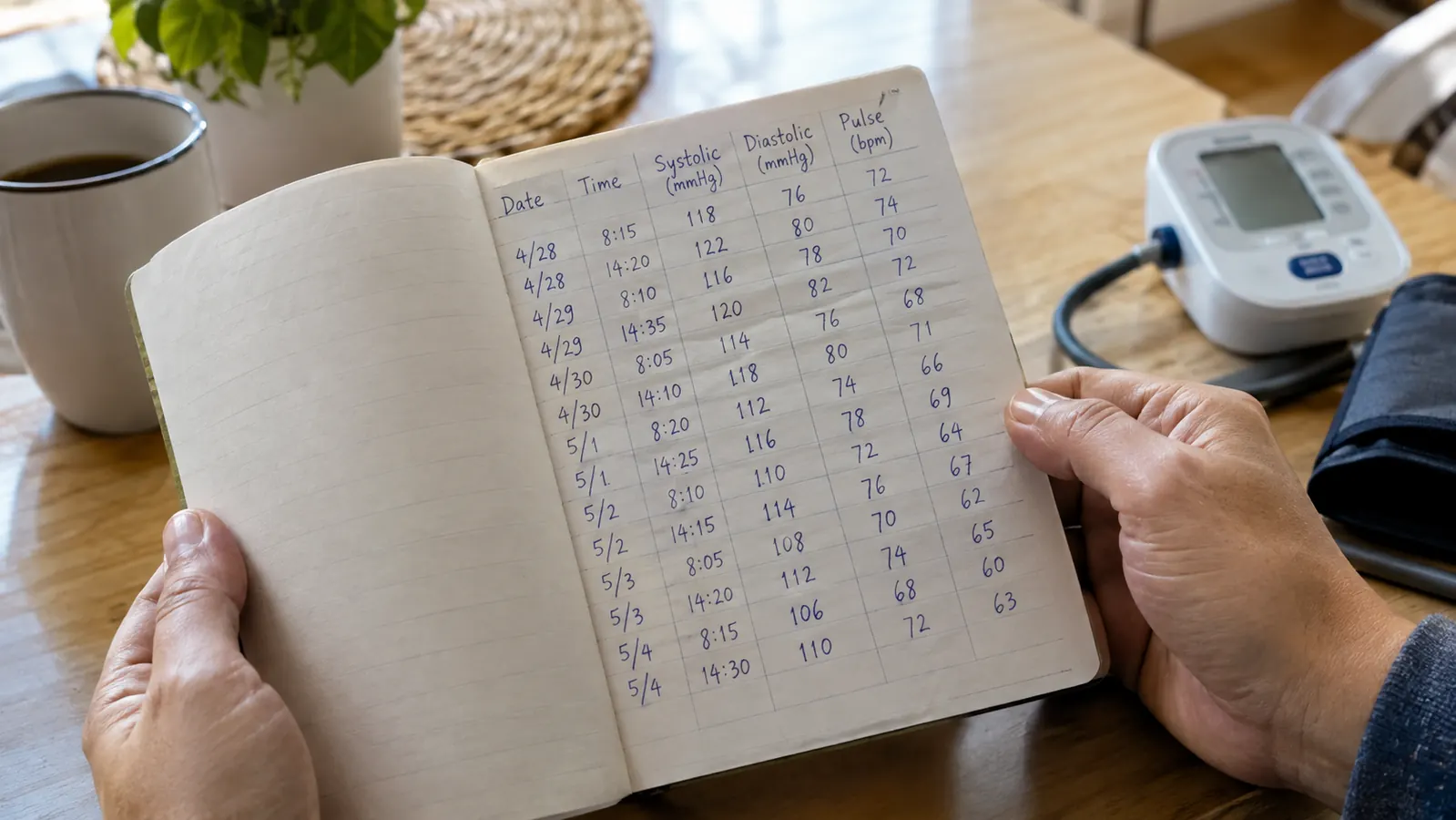
Here is what I learned the hard way. After my first few weeks of home readings, I brought my doctor a spiral notebook with scribbled numbers, little arrows, and coffee stains. She was kind about it, but I could see her flipping pages and trying to figure out which entry went with which date. That was the moment I switched to a proper paper log book with columns for date, time, systolic, diastolic, pulse, and a small note section. I have been using that same style of log for about eighteen months, and I bring it to every appointment. I write in pen, not pencil, because my doctor once told me she has seen logs with numbers erased and rewritten, and she can never tell which version to trust. Pen keeps the record honest, and it takes the temptation away when a number surprises me.
The note section is the part most people skip, and it is the part my doctor finds most useful. If I slept badly, if I had a salty dinner, if I was anxious about something, I write it in one or two words. That context helps my doctor interpret the numbers instead of guessing. I also bring my readings from the Withings app, because it syncs automatically over Wi-Fi or Bluetooth and keeps a clean timeline. Between the paper log and the app, I always have something legible to hand over, even if I forgot the notebook in the car.
One caution: do not let the app replace the conversation. The app is a tool for organizing numbers, not for interpreting them. My doctor is the one who decides what the readings mean and whether anything needs to change. I bring the data, she brings the judgment. That division has made every appointment calmer, because I am not trying to diagnose myself in the waiting room.
Step 3: Take a reading on both arms at your first few sessions
When my doctor first asked me to track at home, she also asked me to take a reading on each arm for the first few days. Blood pressure can differ slightly between arms, and she wanted to know whether mine did. I did that with the Withings BPM Connect, taking one reading on the left arm and then, after a short pause, one on the right. I wrote down which arm each reading came from, and I kept that note in the log.
After those first few days, my doctor told me to settle on one arm and use it consistently, because consistency matters more than which arm you pick. I use my left arm for almost every reading now. When I compare the Withings BPM Connect against my other upper-arm monitor, which I sometimes do just to check that both machines are behaving, I make sure I am using the same arm, the same chair, and the same time of day. Otherwise I am comparing two different situations and learning nothing.
If your doctor has not mentioned arm choice, ask. Some doctors want readings from one arm only. Some want to see both for a while. The point is to follow the instruction you were given, and to write down which arm you used so the log tells a complete story.
Step 4: Bring the log to every appointment, not just the big ones
I used to think the log was only for the appointment where my doctor would review my numbers and decide next steps. What I learned is that she wants to see it at every visit, even the ones that have nothing to do with blood pressure. A few readings from the week before the appointment, taken under the same conditions, tell her more than one reading taken in the exam room while I am nervous and sitting on an unfamiliar chair.
So the log lives in the kitchen drawer, and it goes into my bag the night before any appointment. I also open the Withings app and make sure the latest readings have synced, because the app keeps a continuous record even if I forget to write one entry into the paper book. Having both ready takes about two minutes, and it means I never spend the drive to the clinic trying to reconstruct a week of numbers from memory.
If you use a monitor that syncs to an app, check the sync before you leave. The Withings BPM Connect syncs over Wi-Fi and Bluetooth, so a quick glance at the app timeline tells me whether the last reading made it. If it did not, I take the reading again at home rather than showing up with a gap in the record. Last fall I had an appointment about something unrelated, and the night before I realized the app had not synced for three days. I took a fresh reading, watched it appear in the app, and put the paper log in my bag. In the waiting room the next morning, my doctor had already looked at the numbers and we spent the visit on the question I actually came in with.
Step 5: Ask your doctor what they actually want to see
Every doctor is different, and the best question I ever started asking is a simple one: what do you want this log to look like? Some doctors want two readings a day, morning and evening, for a few weeks. Some want a week of readings before a medication review. Some want the average, some want every single reading, some want to see the time of day next to each number. I stopped assuming I knew, and started asking at the end of each appointment. The first time I asked, my doctor laughed a little and said most people never do. She told me she wanted two readings a day for the two weeks before any visit where we would talk about medication, and that she cared more about the trend than about any single number. I wrote that down on the inside cover of my log book so I would not forget it.
That question changed how I keep the log. When my doctor said she wanted to see the time of day next to each reading, I started writing the time in every single row. When she said a short note about sleep or stress helps, I started writing those notes. The Withings app records the time automatically with each synced reading, which makes it easy to match the paper log to the digital one.
The other thing I ask about is how often to keep going. Home monitoring was originally a short-term request for me, but my doctor and I agreed that keeping the habit makes sense. That is a conversation to have with your own doctor, because the right answer depends on your situation. What I can tell you is that showing up with a clean, consistent log makes that conversation much easier to have.
What Else Helps
A few small things make the whole system easier. Keep the monitor somewhere you will see it, not buried in a closet. I keep mine on the kitchen counter so the evening reading is part of the routine, not a separate chore. Use the same chair and the same arm every time. Keep a pen with the paper log. And if a reading seems odd, do not panic and do not immediately retake it ten times. Take one more reading after a few quiet minutes, write down both, and let your doctor sort it out. A monitor measures. It does not treat, and it does not diagnose. Your doctor does that.
The moment my log became readable, the appointments became conversations instead of decoding sessions.
The monitor I trust to keep the record clean
The Withings BPM Connect has been my evening monitor for about a year. It is FDA cleared, it fits my arm, and it syncs to the Health Mate app over Wi-Fi or Bluetooth so my log stays complete even on days I forget the paper book. If you are starting your own home monitoring routine, this is the one I would start with.
Amazon Check Today's Price on Amazon →