
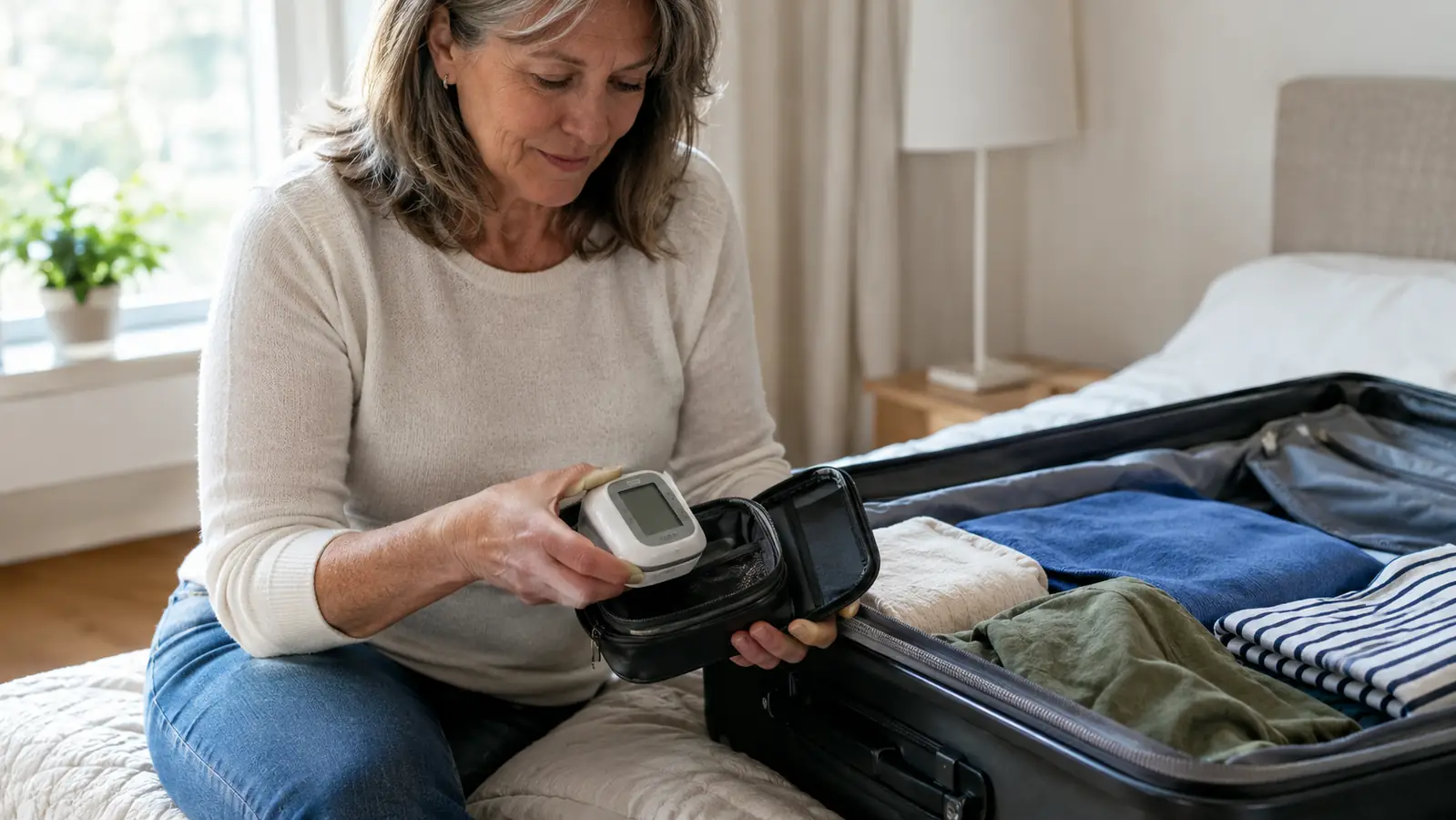
The Omron Gold wrist monitor lives in my travel bag. It has for about a year now, ever since I realized that the week before a trip was when my home blood pressure routine fell apart. I would tell myself I would pick it back up when I got home, and then I would come home to a log with a gap in it and have to explain the gap to my doctor. That bothered me more than the readings ever did.
I am Ruth. I am 63, I am retired, and I live in Round Rock, Texas, with my husband Walt. About two and a half years ago, a routine checkup showed readings higher than my doctor liked, and she asked me to take readings at home twice a day for a few weeks and bring her a log. I kept the habit. Most mornings I use my Omron Bronze upper-arm monitor at the kitchen table, sitting in the same chair, feet flat, arm resting on the table at heart level, after five quiet minutes. Most evenings I use my Withings monitor so the readings sync to my phone. But neither of those goes on a trip with me. The Omron Gold does.
I should say plainly that I am not a doctor or a nurse. I am a retired middle-school librarian who got asked to keep a log and kept it. A monitor measures; it does not treat or lower anything. Your own doctor is the one who interprets your numbers and decides what, if anything, to do about them. My job here is just to tell you what it is like to pack this particular monitor and use it away from home.
The Omron Gold is a wrist monitor. That is the whole reason it travels well. It is about three and a half inches long, about two and a half inches wide, about half an inch thick, and it weighs a little over three ounces. It runs on two AAA batteries, and the box includes a case. I do not have to think about whether it will fit; it fits in the side pocket of my bag next to my reading glasses.
The monitor that actually comes with me
If you track blood pressure at home and you travel at all, this is the one I keep in my bag. It stores readings, it has a morning spike indicator, and it connects to the Omron app. Check today's price on Amazon.
Amazon Check Today's Price on Amazon →Here is how it works in practice. The monitor stores up to 200 readings for me and another 200 for a partner, and it has a High Morning Average Indicator that flags morning spikes linked to higher cardiovascular risk. I use that feature the way I use the rest of this monitor: I read it, I write it in my log, and I bring the log to my doctor. It connects to the free Omron app by Bluetooth, so when I remember to open the app, my readings land on my phone. I will be honest: I am a paper-log person. I still fill in the date, the time, both numbers, my pulse, and a short note in my Blood Pressure Log Book. But on a trip, the Gold is the monitor that makes it possible for me to have anything to write down at all.
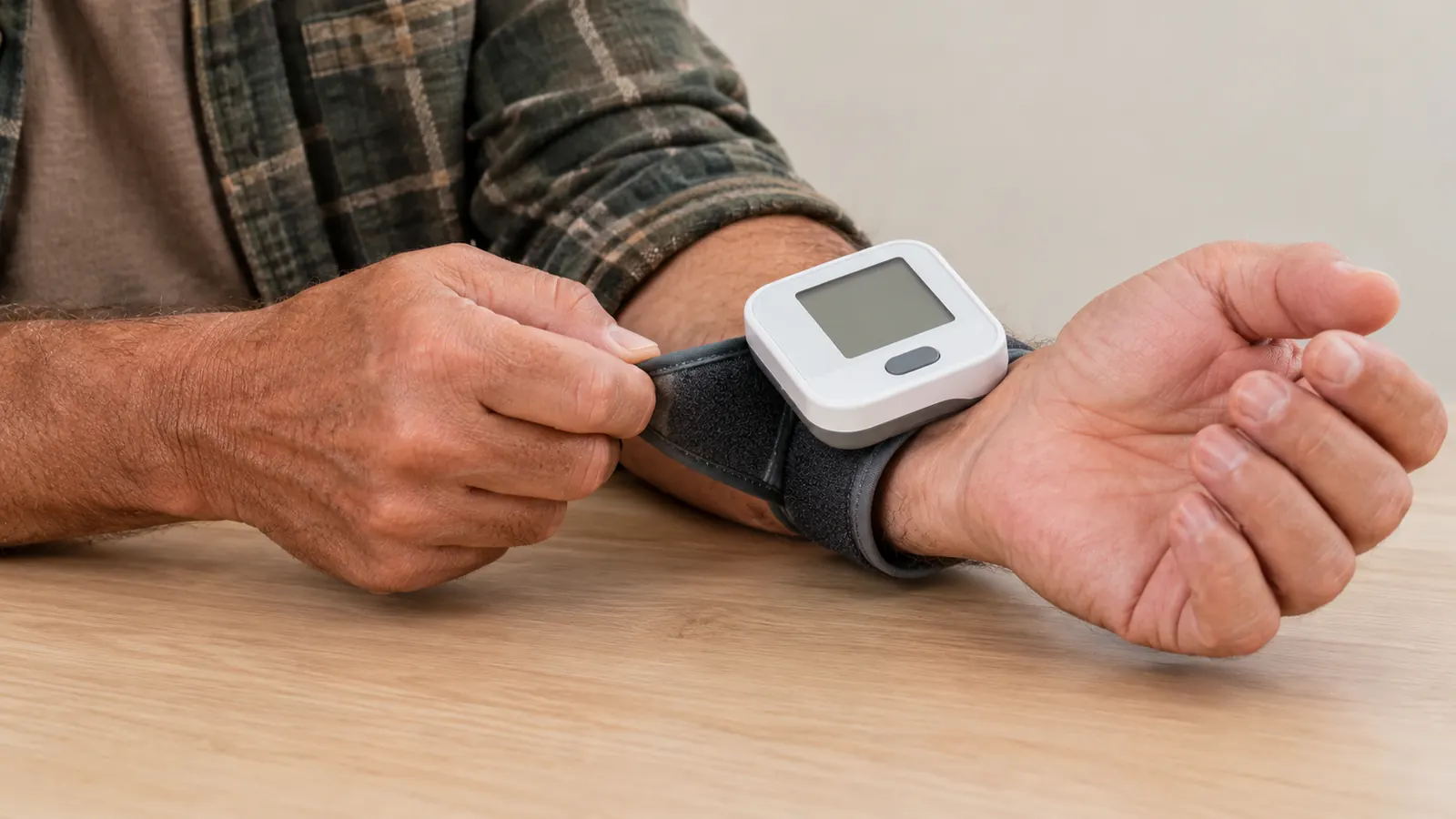
The cuff is the part I had to get used to. The band is about eight and a half inches, and it wraps around my wrist with room to spare. My own wrist is small, so I have to position the monitor carefully, about a finger's width above the crease of my wrist, with the display facing up. The instructions say to rest your arm at heart level, and at a hotel desk that means propping my arm on a folded towel or a paperback book. It takes me longer to get the Gold positioned than it takes me to set up my upper-arm monitor at home. That is the honest tradeoff.
The Omron Gold is the monitor that makes it possible for me to have anything to write down at all when I am away from my kitchen table.
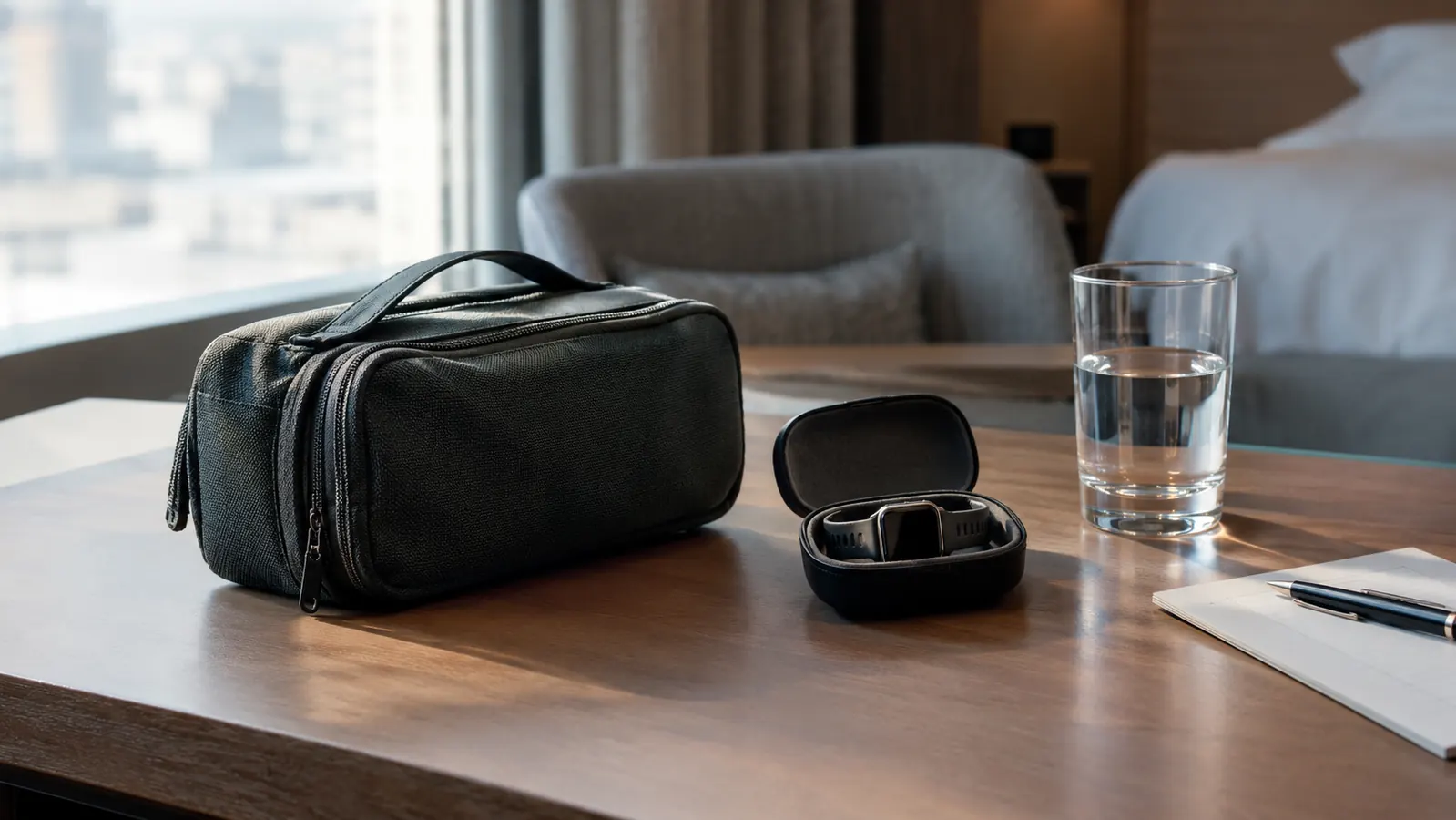
What I love about it is that it is always there. The week before a trip, I do not have to remember to pack a monitor, because the Gold never gets unpacked. It lives in my bag, in its case, with two spare AAA batteries in the same pocket. When I get to my daughter's place in San Antonio, I take it out, sit down at her kitchen table, and take my reading the same way I would at home: five quiet minutes first, feet flat, arm resting at heart level. The habit survives the trip, and the log does not have a gap in it.
There are things I would tell you honestly. The Gold reads from the wrist, and wrist readings can be less consistent than upper-arm readings, which is why at home I still prefer my upper-arm monitor. The display is digital and easy to read, and the included case keeps it from getting knocked around in my bag. The batteries are included, which I appreciated the first time. But it is a wrist monitor, and it behaves like one. If you have very large wrists, check the band size before you buy.
I also want to be clear about what this monitor is for. It is for keeping your routine going when you are away from home. It is not a replacement for your doctor, and it is not a treatment for anything. If you are thinking about starting to check your blood pressure at home, the best first step is to ask your doctor what they want you to do, and then bring them the log. That is what I did, and it is still what I do.
What I'd Tell You If We Were Sitting at My Kitchen Table
If we were sitting at my kitchen table, I would tell you this: the best blood pressure monitor is the one you will actually use, in the place where you actually are. At home, that is my upper-arm monitor, because it is the most consistent and it is already on the kitchen table. On the road, that is the Omron Gold, because it is the one that is already in my bag. Pack it before the trip, not the night before. Keep it in its case. Bring spare batteries. Sit down, take five quiet minutes, and take the reading the same way you would at home. And bring the log to your doctor. That last part is the whole point.
Pack the Omron Gold for your next trip
A compact wrist monitor, a case, and a morning spike indicator, all in the side pocket of your bag. If you track blood pressure at home, this is the one I keep ready. Check today's price on Amazon.
Amazon Check Today's Price on Amazon →