
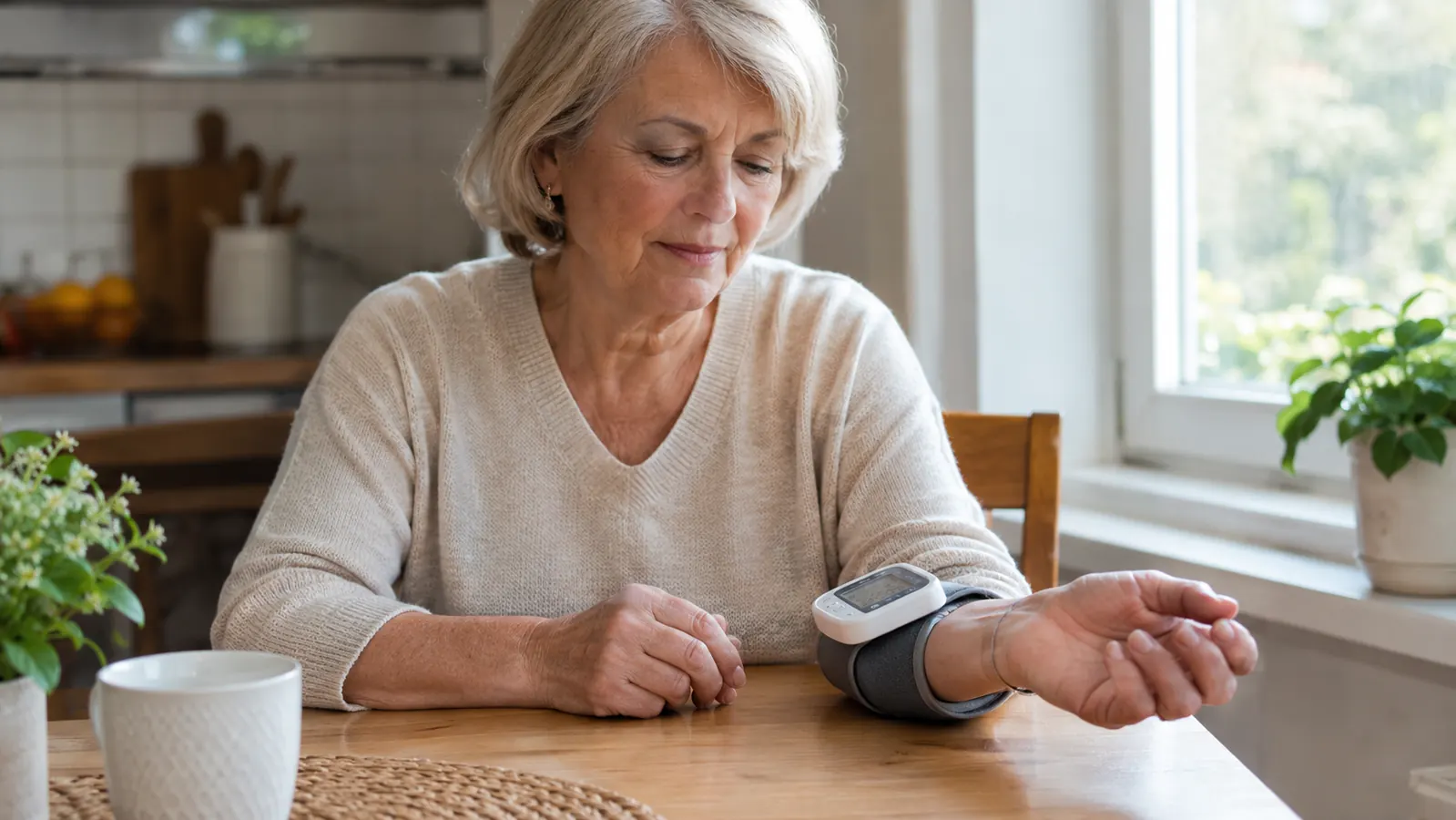
If you are trying to decide between the Omron Gold wrist monitor and a traditional upper-arm monitor, here is the short answer after a year of using both: for everyday home use, an upper-arm monitor is the more practical choice, but the Omron Gold wrist monitor is the one I pack for travel. I take readings twice a day, morning and evening, and I have done that for about two and a half years now. The Gold lives in my travel bag for trips to see my daughter in San Antonio. My upper-arm monitor, the OMRON Bronze, stays on the kitchen table at home in Round Rock. Both monitors were made by Omron, and both give me numbers I can bring to my doctor. The difference is not accuracy in any meaningful sense; it is how each one fits into a real day. Each one has a real place, and the question is which one belongs in your kitchen drawer and which one belongs in your bag.
I am Ruth, a retired middle-school librarian in Round Rock, Texas. About two and a half years ago, a routine checkup showed readings higher than my doctor liked, and she asked me to take readings at home twice a day for a few weeks and bring in a log. I kept the habit, and I have learned exactly how much cuff fit, posture, and timing matter. I keep a paper log in the kitchen drawer, and I also use the Withings app for my evening readings, so I have two ways of looking back at my numbers. I am not a nurse or a doctor. I am just someone who has taken a lot of readings, and I will tell you what I found when I compared the Omron Gold wrist monitor against my upper-arm monitor. The two monitors measure the same thing, but they do not ask the same things of me, and that difference is what this comparison is really about.
| Omron Gold Wrist Monitor | OMRON Bronze Upper-Arm Monitor | |
|---|---|---|
| Cuff fit | Slips onto the wrist in seconds; no sizing needed | Needs a cuff that fits your arm; the included cuff covers 9 to 17 inches |
| Positioning | Easy to keep at heart level with a small pillow or towel | Arm must rest on a table at heart level; takes a little more setup |
| Reading consistency | More sensitive to wrist position; small shifts change the reading | More forgiving of minor movement; my daily readings stay steadier |
| Storage of readings | Stores up to 200 readings each for two users and syncs to the Omron Connect app | Stores readings too, but I have to write them in my paper log to keep a complete record |
| Morning average check | High Morning Average Indicator on the display flags a pattern at a glance | I spot the pattern myself by scanning my paper log |
| Travel | Small, light at 3.2 ounces, and comes with a case; made for a bag | Bulkier and needs its cuff; doable but takes up real space |
| Best for | Trips, a desk drawer, or a second monitor for a partner | Daily home use and the most consistent readings |
Where the Omron Gold Wrist Monitor Wins
The Omron Gold wrist monitor wins on convenience, and convenience is not a small thing when you are trying to build a twice-daily habit. There is no cuff to line up, no tube to position, no sizing question. I slip it on my left wrist, rest my arm on the table, wait five quiet minutes, and take the reading. The band measures 8.5 inches, and it wraps around my wrist without any fiddling. When I am at my daughter's place in San Antonio, I do the same thing at her kitchen table. One morning last spring I took a reading at her house before coffee, then another after breakfast, and the whole routine took me less than ten minutes from start to finish. I did not have to find the right chair or adjust a cuff; I just sat down, wrapped the band, and waited. The display is digital and easy to read without my glasses, which matters at six in the morning. The unit itself is small, 3.58 by 0.52 by 2.49 inches, and it weighs 3.2 ounces, about the same as a deck of cards. It runs on 2 AAA batteries that are included in the box, so I never had to make a special trip to the store before my first trip. It came with its own case, and the case is the reason the monitor actually makes it into my bag. My upper-arm monitor has a cuff and a tube and a boxy shape, and it stays home. The Gold tucks into the side pocket of my overnight bag next to my reading glasses and my paper log book. The first time I used it, I was surprised that something so small could give me a reading I trusted enough to write in my log.
It also wins on storage and connection. The Omron Gold stores up to 200 readings each for me and for a partner, and it connects to the free Omron Connect app over Bluetooth, so I can keep a longer record without writing every number down. I still keep my paper log, because my doctor likes to see it, but the app gives me the trend at a glance. On the first day I used the Gold, I paired it with the app at the kitchen table, and the reading appeared on my phone before I had put the monitor back in its case. That is the kind of small moment that makes a habit stick. The monitor also has a High Morning Average Indicator, which flags mornings when the average runs higher. My doctor had mentioned that morning readings can tell a different story than evening ones, so I like having that signal on the display without having to scan a month of numbers myself. I also like that the app does not judge. It simply collects the numbers, and I decide what to do with them, which is usually nothing except to show my doctor at my next visit. On a longer trip I can take a full week of readings and the monitor still has room for more, because 200 readings per user covers more than three months of twice-daily use before the memory fills up. That is a comfort when I am away from my usual routine. My upper-arm monitor stays home; the Omron Gold goes in my bag.
Where the Upper-Arm Monitor Wins
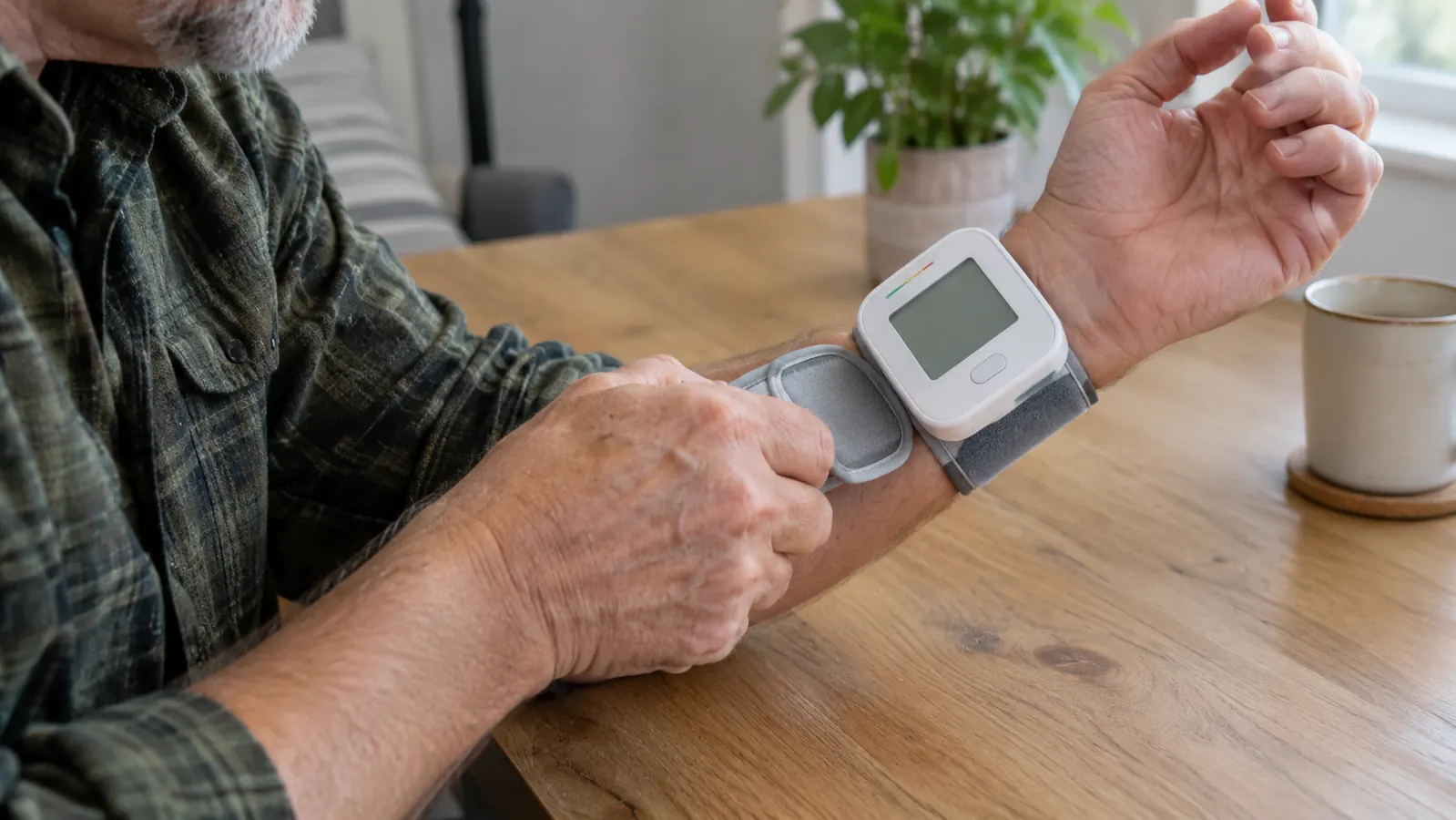
I have to be honest: my OMRON Bronze upper-arm monitor gives me steadier readings at home. The Omron Gold is more sensitive to wrist position, and a small shift can change the number. One morning I took a reading with the Gold, then immediately took another with my upper-arm monitor, and the difference between the two was larger than I expected. On that particular morning I had slept well and taken my usual walk, so I could not blame the difference on a bad night or a rushed start. I sat in the same chair, used the same arm, and waited the same five quiet minutes. The only difference was the monitor. With the upper-arm monitor, I sit in the same chair, rest my arm on the table, and the cuff does most of the work. My morning readings have been more consistent with the upper-arm monitor, and consistency is what helps my doctor see a real pattern. I noticed this most clearly during the first month I owned the Gold. I was excited about the new monitor, so I took a week of readings with it in the morning and my upper-arm monitor in the evening. By Friday I could see that the evening numbers were settling into a tighter range than the morning ones. Part of that is the time of day, but part of it is the hardware. The wrist band sits on a part of the arm that moves and bends, and keeping it exactly at heart level takes a small pillow or a folded towel under my arm. The upper-arm cuff holds its position on its own once it is wrapped. I have learned to expect a slightly wider range from the wrist monitor, and I simply do not worry about a single odd reading from either one. For a person who wants the most consistent daily readings at home, that steadiness is worth the extra setup.
The upper-arm monitor is also easy to share. My husband Walt uses it with the pre-formed Omron ComFit cuff, which fits arms from 9 to 17 inches and is easier for him to put on by himself. He found the original cuff on my upper-arm monitor fiddly to wrap by himself, so about eighteen months ago we bought him the pre-formed ComFit cuff, which goes on right every time. The Omron Gold wrist monitor fits his wrist fine, and he has used it a few times when I handed it to him at the kitchen table. But when he wants a reading he trusts, he reaches for the upper-arm monitor with the large cuff. Walt writes his readings in our log book with his initials, and his own cuff means he does not have to ask me to set anything up. My own arm measures about 11 inches around, and the standard cuff fits me without a problem, so we have one monitor with two cuffs that we swap depending on who is sitting down to take a reading. That works well at home. The Gold cannot do that trick, because the band is a fixed 8.5 inches meant for a wrist, and wrists do not vary as much as upper arms. I also like that the upper-arm monitor does not care whether I am sitting at the kitchen table or at the desk in the study. The cuff finds the same spot on my arm every time, and that sameness is exactly what I want when I am filling in my paper log. If you want one monitor the whole household can use, the upper-arm style is the more practical choice.
Want the monitor that fits in your bag?
The Omron Gold wrist monitor stores up to 200 readings per user, connects to the Omron Connect app, and comes with a travel case. It is the one I reach for on trips.
Amazon Check Today's Price on Amazon →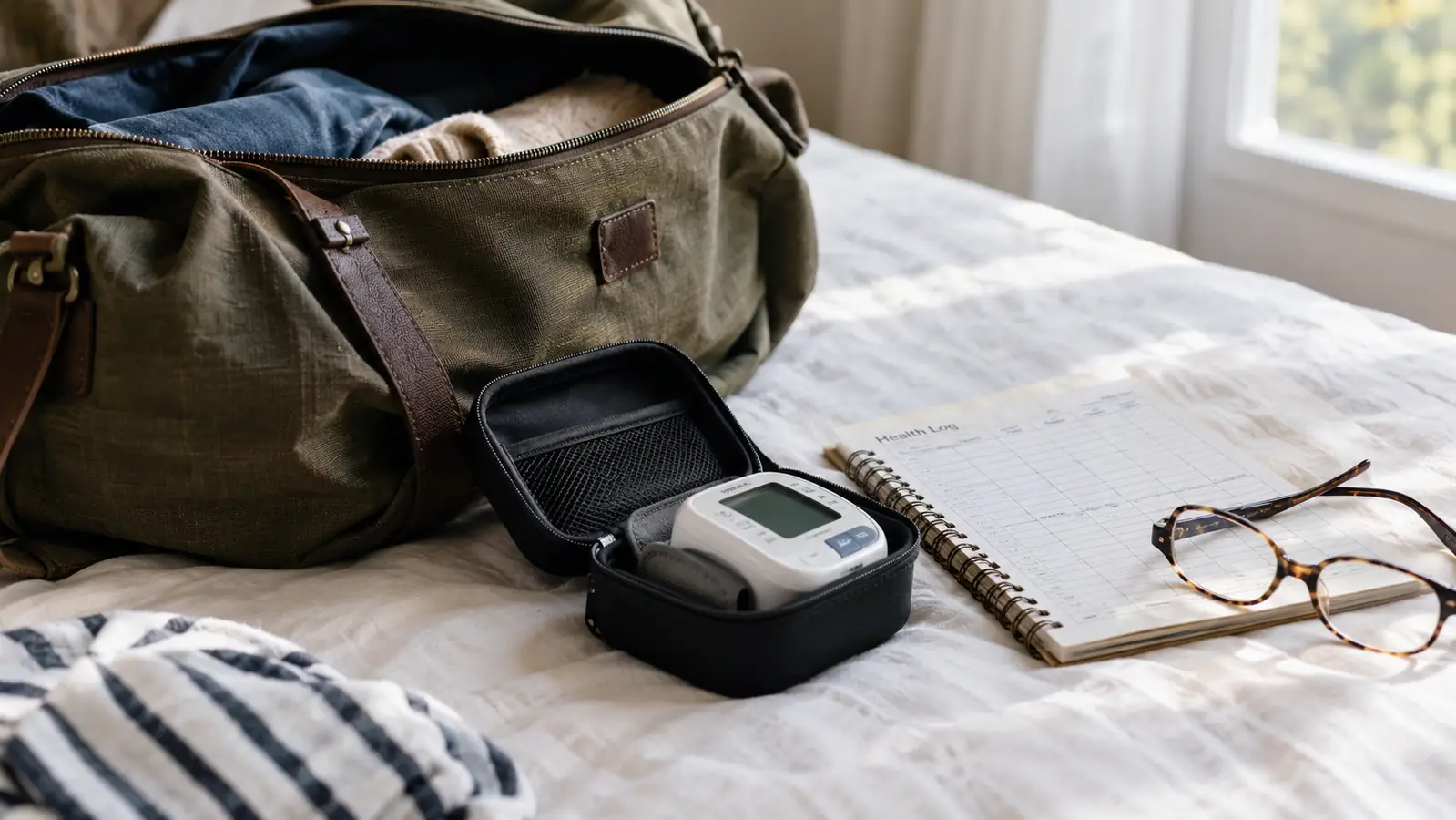
Who Should Buy Which
Buy the Omron Gold wrist monitor if you travel, if you want a monitor you can keep in a desk drawer, or if you want to check readings without dealing with a cuff. It is also a good second monitor for a household that already has an upper-arm unit. I keep mine in the travel bag that sits by the front door, and it is the reason I have not missed a full week of readings on any trip since I bought it. At home, if I want a quick check without walking to the kitchen, I can grab the Gold from the drawer by the front door, though I usually prefer to keep my routine identical. Buy the upper-arm monitor if you want the most consistent daily readings at home, or if you want one monitor that works for more than one person. If I could keep only one, I would keep the upper-arm monitor for daily use, but the Omron Gold is the one I actually carry. Walt and I have settled into a simple division: the upper-arm monitor stays on the kitchen table, and the Gold comes with me when I leave town. On a typical week I use the upper-arm monitor most mornings and the Gold when I am away. That division has held up for about a year now, and it is the arrangement I would recommend to anyone trying to decide between the two.
Whichever you choose, the habit matters more than the hardware. Sit in the same chair, feet flat, arm resting at heart level, and take your readings at the same times each day. Write them down, or let the Omron Connect app track them for you. Then bring the log to your doctor. The monitor measures; your doctor interprets. I learned that lesson in the first few weeks, when I took readings at odd times and in odd positions and then worried about numbers that were not really comparable. Once I settled into a routine, the numbers made sense. I fill in the date, the time, both numbers, my pulse, and a short note about how I am feeling, and I bring that log to every appointment. My doctor does not treat me based on a single reading; she looks at the pattern across weeks. The Gold is the monitor I hand to a friend who asks what to buy for a parent who travels; the upper-arm monitor is what I recommend for a kitchen counter. A monitor that fits your life, whether it is the Omron Gold on your wrist or an upper-arm monitor on your kitchen table, is the one that will actually get used. That is the practical choice.
The Omron Gold is the one I pack
Small, light, and easy to use on the go, the Omron Gold wrist monitor stores up to 200 readings per user and syncs with the Omron Connect app. It is the practical choice for travel and for keeping a steady habit anywhere.
Amazon Check Today's Price on Amazon →