

If you've ever taken a blood pressure reading at home and quietly wondered whether the number was really yours, check the cuff before you blame the monitor. I learned that lesson about a year into our home routine, when Walt's readings started looking like a coin toss. The problem wasn't his arm or the monitor. It was the cuff, and the fix was the Omron ComFit large cuff.
This is not a medical article. I'm Ruth, I'm not a doctor or nurse, and your doctor is the one who interprets your numbers and decides on treatment. A monitor measures; it doesn't treat or lower anything. What I can tell you is what worked in our house: Walt uses the Omron ComFit large cuff on the Bronze most mornings, and I use the original cuff. We bought the ComFit because Walt found the original cuff fiddly to wrap by himself. It kept going on too loose or too low. The easy-wrap shape goes on more consistently, and it gave each of us our own cuff. That sounds like a small thing. It turned out to be the whole thing.
A Cuff That Goes On Right, Every Time
If your home readings keep coming out inconsistent, the cuff is the first thing to check. The Omron ComFit large cuff fits upper arms 9 to 17 inches and is made for Omron upper-arm monitors.
Amazon Check Today's Price on Amazon →Why Fit Matters More Than the Monitor
The monitor gets all the attention, but the cuff is the part that touches your arm. If the cuff does not sit right, the reading starts from a bad position. I noticed this when Walt used the generic universal cuff: the numbers wandered even though the monitor was the same. The cuff is not an accessory. It is the part of the setup that has to match the person.
Omron makes the ComFit large cuff for upper arms that measure 9 to 17 inches. That range covers Walt's 15.5 inch arm and leaves room for the cuff to sit where it should. When the size matches, the rest of the routine is easier to repeat, and repeatable is what a home log needs.
Ten Reasons the Right Cuff Size Matters
A cuff that fits stays where you put it
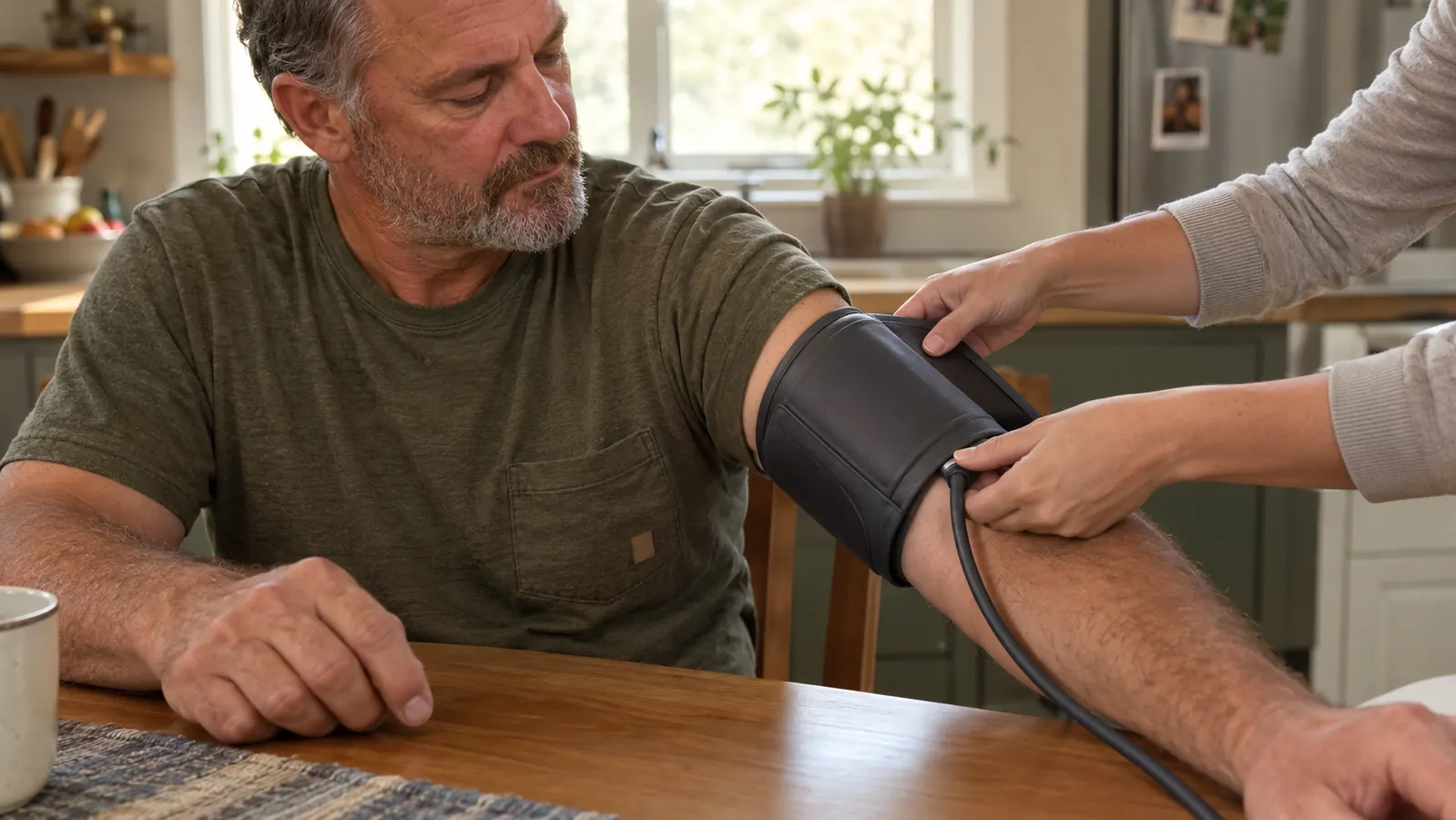
The first thing I noticed with the ComFit was how it behaved while Walt wrapped it. The old cuff would slide down by the time he let go, and he would have to start over. This one sat where he placed it. When the cuff stays put, the reading feels like it came from a settled arm, not a wrestling match. That sounds small, but it changed the whole tone of our morning.
Consistent placement makes the log more useful
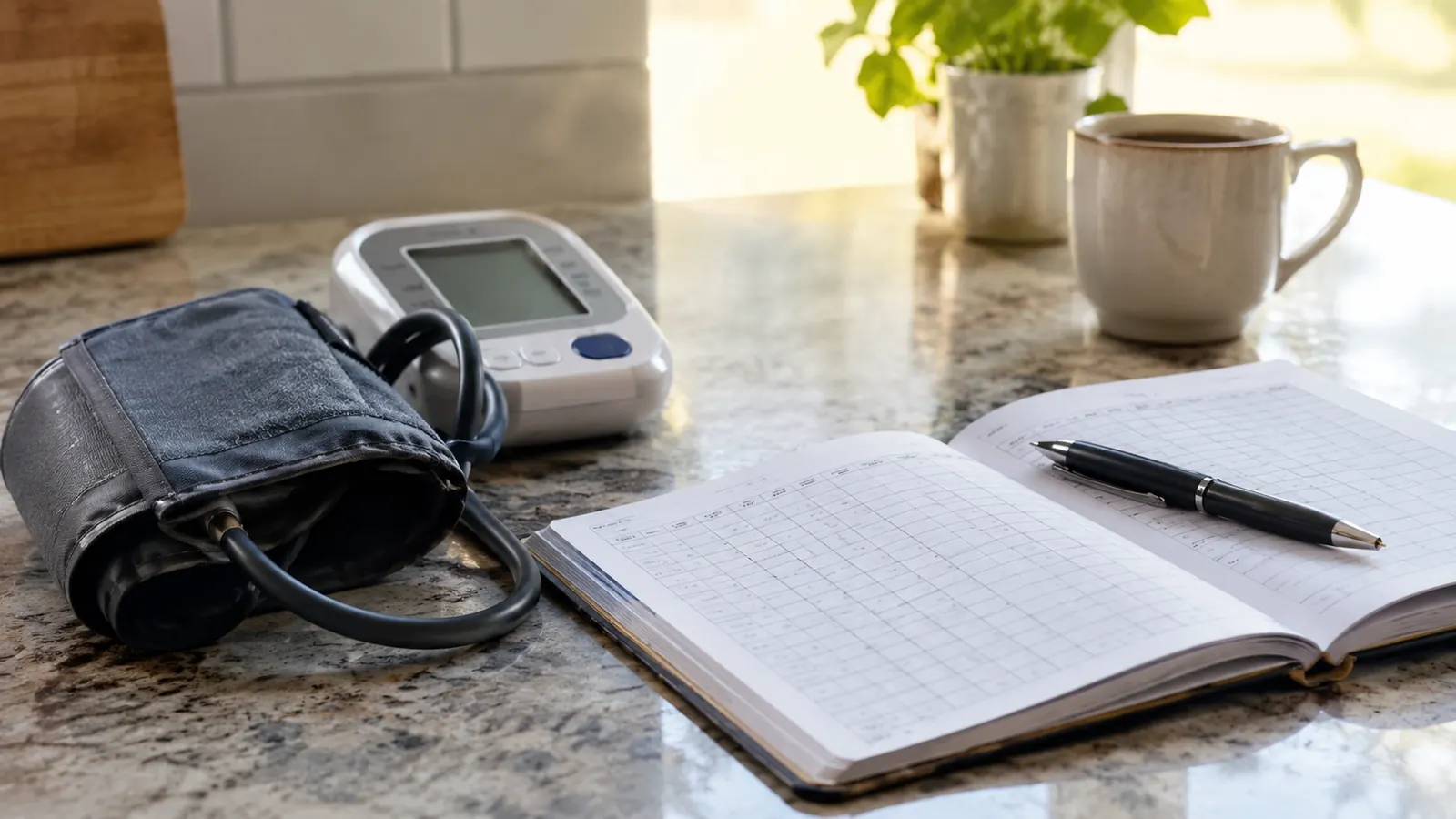
Our log book only means something if every reading is taken the same way. Same chair, same table, same arm position, same cuff placement. Walt's cuff goes on the same way each morning because it is easier to wrap correctly. That consistency is why I trust the page of numbers I hand to my doctor. A reading taken differently every time is just a number with no story behind it.
Too loose was our real problem
Walt's arm measures about 15.5 inches, so both the original cuff and the ComFit fit him. The original fit, but he kept putting it on too loose. A loose cuff slipped and gave him readings that bounced around. The ComFit's shape made it easier for him to get the fit right without asking for help. We did not need a bigger cuff. We needed a cuff that went on right the first time.
Too tight makes you tense up
A cuff that is too tight is uncomfortable, and an uncomfortable arm is not a relaxed arm. I am not a doctor, but I know that taking a reading while you are gritting your teeth is not a calm reading. A cuff in the right range, 9 to 17 inches for this one, lets you sit still and breathe. The whole point of a home reading is to take it the way your doctor wants, without added tension.
It is made for Omron upper-arm monitors
The Omron ComFit large cuff is compatible with the BP5250, BP7350, and BP7450 models. We use it on our Bronze, and it connects the same way the original cuff did. Knowing it is made for the same family of monitors took the guesswork out of buying a second cuff. If you are checking compatibility before you buy, that is the list to look for.
It gave Walt his own cuff
Walt and I share the kitchen table, the chair, and the log book, but we do not have to share a cuff. He uses the ComFit, I use the original. That may sound like a small luxury, but it means neither of us is adjusting a cuff that someone else just used. It also means Walt does not have to re-wrap the same cuff twice. Separate cuffs made our routine feel more private and more dependable at the same time.
The easy-wrap shape helped Walt wrap it by himself
Walt's main complaint was that the original cuff was fiddly to wrap by himself. He would hold the monitor in one hand and try to position the cuff with the other. The ComFit's easy-wrap shape goes on more consistently, so he can do the whole thing without calling me over. Independence matters more than you would think. It also means he takes his reading at the time that works for him, not the time that works for me.
It ended our experiment with a universal cuff
Before the ComFit, Walt tried a generic, unbranded one-size universal cuff for a few weeks. It slipped, and his readings were all over the place. The Omron ComFit replaced it and gave us a clear comparison. A cuff that matches your arm and your monitor is worth more than a one-size promise. We learned that the hard way, so you do not have to.
It comes ready to use
The cuff includes the air plug and an instruction manual, so there was no hunting for parts. It is also listed as travel-friendly, which fits how we live: it stays in the house on the Bronze, and the wrist monitor goes to San Antonio. Simple setup means we actually use it twice a day. The less a piece of equipment asks of you, the more likely you are to keep the habit.
A cuff you trust keeps you consistent
The real reason cuff size matters is not the cuff. It is the habit. If the cuff annoys you, you skip readings. If it goes on easy and stays put, you take them. We have kept our twice-daily routine for about two years because nothing about it is a fight. That is the quiet win. The right cuff does not make the reading good by itself, but it makes taking the reading easy enough to keep doing.
None of this is medical advice. I am telling you what made our twice-daily routine feel steadier. If you are not sure whether your cuff fits, measure your arm and compare it to the range on the package, then bring your log to your doctor.
What I'd Skip
If your arm measures under 9 inches or over 17 inches, this large cuff is not the right size. If you do not have an Omron upper-arm monitor, check compatibility before you buy. And if you already have a cuff that wraps easily and gives you steady readings, you do not need another one. Buy a cuff because your current one is a struggle, not because a new one sounds nicer.
The day Walt's readings stopped bouncing around, I stopped second-guessing our whole routine.
That is the honest measure of a cuff for us. It did not change any numbers by itself. It changed how easily we took the readings, and that is what kept us doing it.
Make Your Home Readings Easier to Trust
If your cuff is the fiddly part of your routine, the Omron ComFit large cuff is worth a look. It fits upper arms 9 to 17 inches and works with Omron upper-arm monitors.
Amazon Check Today's Price on Amazon →