

For about two years I have taken my blood pressure at the kitchen table, same chair, feet flat, arm resting at heart level, after five quiet minutes. My doctor asked me to do it twice a day, morning and evening, and bring her a log, and I kept the habit long after the few weeks she asked for. My husband Walt takes his own reading most mornings on our Omron upper-arm monitor, and for a while he used a generic one-size universal cuff that came from who knows where. It slipped, it gave him readings that did not match mine, and it made him trust the whole routine a little less. Then we bought the Omron Large ComFit Cuff, the 9 to 17 inch easy-wrap one, and I have been meaning to write down the comparison ever since. Walt is 66, and his upper arm measures 15.5 inches, right in the middle of the range, so the problem was never that the cuff was too small. The universal cuff wrapped around him fine. The problem was that it never went on the same way twice. Some mornings he would get it snug, other mornings it would be loose enough that I could see daylight at the edge, and once or twice it slipped down while it inflated and he had to start over. He would sigh, take it off, put it on again, and the second reading would not match the first for no reason either of us could explain.
Short answer: if you are buying a replacement cuff for an Omron monitor and your arm measures anywhere near the middle of the range, the Omron Large ComFit is worth the extra few dollars. The universal cuff is cheaper and it does wrap around Walt's arm, but it never went on the same way twice. The ComFit goes on the same way almost every time, and for home blood pressure readings, consistency is the whole point. A monitor can only measure what the cuff delivers, and a cuff that sits differently each morning gives you a log full of noise instead of a log you can hand to your doctor. If you are comparing the two because you are tired of fighting your current cuff, that is exactly the situation the ComFit was made for.
Omron Large ComFit Cuff vs Universal Third-Party Cuffs at a Glance
| Omron Large ComFit Cuff | Universal Third-Party Cuff | |
|---|---|---|
| Fit range | Fits upper arms 9 to 17 inches, sized and labeled clearly | One-size claims usually cover 9 to 17 inches but the fit is less predictable |
| Wrap ease | Pre-formed easy-wrap shape goes on correctly with one hand | Flat, floppy cuff that Walt had to line up carefully and often wrapped too loose or too low |
| Reading consistency | Went on the same way morning after morning, readings matched the log | Slipped during readings and gave Walt numbers that jumped around |
| Compatibility | Made for Omron models BP5250, BP7350 and BP7450, with the air plug that fits them | Usually sold as universal, but the connector fit our monitor loosely |
| Price | A little more than a generic universal cuff | Cheaper, sometimes by a lot |
| Best for | Someone who takes readings daily and wants the cuff to go on right every time | A spare cuff for occasional use, or a very tight budget |
Where the Omron ComFit Wins
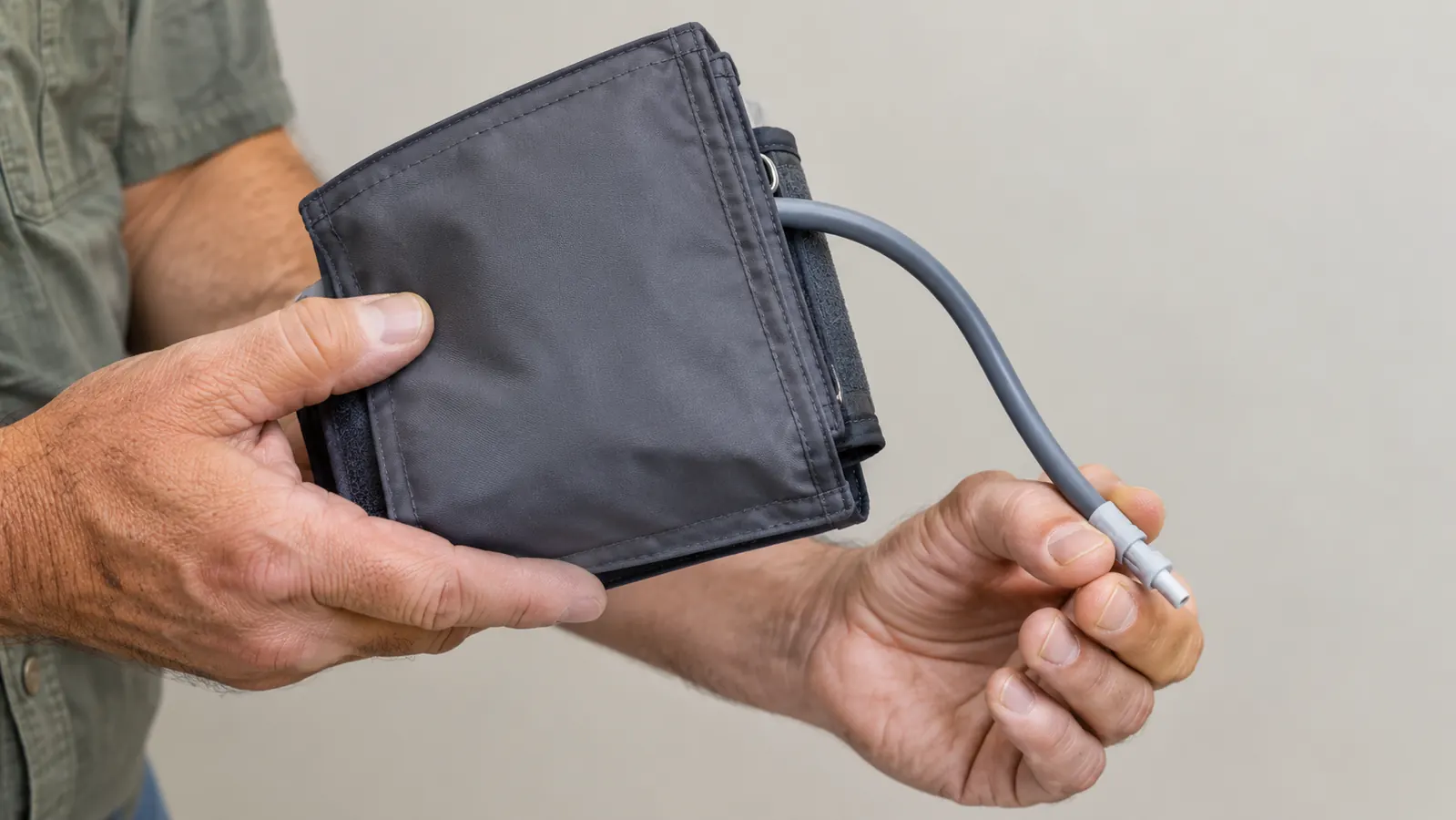
The biggest difference is how the cuff goes on. The Omron Large ComFit is pre-formed, so it holds a gentle C shape even when it is lying on the table. Walt can pick it up, wrap it around his upper arm with one hand, and pull the tab until it fits snugly. The universal cuff is a flat rectangle of fabric and bladder, and every time he used it he had to hold it in place while he wrapped, and he usually ended up with it too loose or sitting too low. A cuff that is too loose reads low, and a cuff that sits too low can read high, so he was getting readings that did not reflect what was actually going on. During those few weeks, one morning Walt took three readings in a row with the universal cuff. The first one came out lower than his usual, the second higher, the third somewhere in between. He looked at the monitor and said, 'Which one do I write down?' That was the moment I started looking for a proper replacement.
The ComFit also connects properly to our Omron monitor. Omron lists this cuff as compatible with the BP5250, BP7350 and BP7450, and the air plug fits our monitor's port snugly. The universal cuff's connector fit too, but it was loose enough that Walt found himself checking it every time. That is the kind of small annoyance that does not matter on day one and wears on you by week three. The ComFit has the 1-year limited warranty, and it is a genuine Omron part, so we did not have to wonder whether the bladder would hold up. The cuff itself is light, 7.76 ounces, and the whole package is small enough that it does not take over the kitchen drawer. Omron's listing says it is 6.6 by 4.1 by 3.4 inches, and it comes with the air plug and an instruction manual, which is more than the universal cuff came with. The universal cuff arrived in a plastic bag with no paperwork at all.
The other thing I did not expect is how much the pre-formed shape helps when you are wrapping your own arm. With the universal cuff, Walt had to hold one end against his arm with his chin or his chest while he pulled the other end around, and by the time he got it positioned the bladder had shifted. With the ComFit, the C shape does the holding for you. He slides it over his arm, the shape settles around his bicep, and he pulls the tab. It takes him maybe ten seconds now, and he does not have to check it twice. For a man who used to put the cuff on 'good enough' just to get it over with, that is the whole ballgame.
There is also the simple matter of having two cuffs. Our Omron monitor came with its own cuff, and it fits Walt just fine, same 9 to 17 inch range. We bought the ComFit about a year and a half ago, and it was never because his arm outgrew anything. He found the original cuff fiddly to wrap by himself, and the ComFit gave each of us our own cuff. I keep using the original cuff, and Walt uses the ComFit, so neither of us has to re-wrap a cuff that someone else just used or wonder whose turn it is. For a household with two people taking daily readings, that alone is worth something.
Where the Universal Cuff Wins
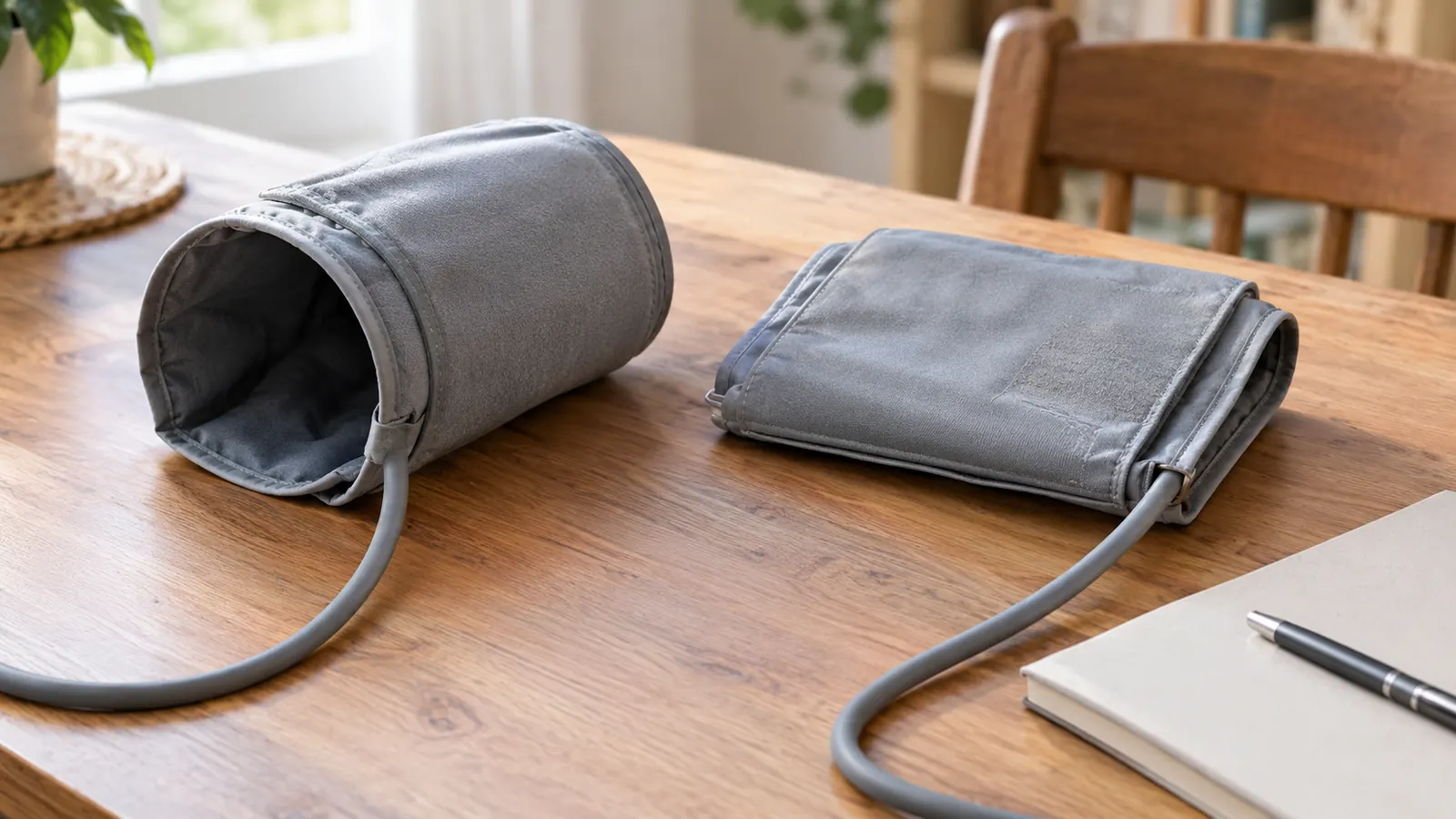
I will give the universal cuff its due: it is cheaper, and it is easier to replace on a whim. If you only take a reading once in a while, or you want a spare to keep in a travel bag, the lower price of a generic cuff is genuinely appealing. It also fit Walt's arm, technically. At 15.5 inches he is right in the middle of the 9 to 17 inch range, and the universal cuff wrapped around him with room to spare. The material was soft, the bladder inflated without any odd noises, and the first few readings looked reasonable. I am not going to pretend it was obviously bad on day one, because it was not.
But cheaper only wins if the readings are trustworthy, and that is where the universal cuff fell apart for us. Walt's numbers wandered from one morning to the next in a way that did not match how he felt or what the doctor's office showed. He would put the cuff on, it would slip a little as it inflated, and he would redo the reading, and the second number would be different for no clear reason. That is the worst outcome for a home monitor: it does not save you money, it just makes you doubt the tool you are supposed to trust. I remember him standing in the kitchen doorway one morning holding the monitor and saying, 'I do not trust this thing.' That is when we ordered the ComFit. The universal cuff went into the drawer and it has stayed there. I am not saying every generic cuff is like that. But the one we had never gave Walt a reason to believe it, and for something you are supposed to do twice a day, belief is half the routine.
The other place a universal cuff makes sense is as a backup. If your main cuff fails on a Sunday and you do not want to wait for shipping, a cheap spare that lives in a drawer is better than no cuff at all. I would just test it against your regular cuff a few times before you trust it, same arm, same chair, a few minutes apart, and write down both readings. If they line up, keep the spare. If they do not, you know before it matters. Our universal cuff never got that chance; it was tried as a daily cuff and failed the test. But as a spare for emergencies, the math is different, and a cheaper cuff can be the right call.
The universal cuff also wins on the simple matter of not caring about it. Because it cost less and meant less, we did not worry about it, and there is something to be said for a spare you are not precious about. If it wears out or gets lost in a drawer, so what. The ComFit is the cuff we reach for every day, and the universal cuff is the one we would not mind losing. For a backup, that is actually the right personality.
If your cuff is the reason you skip readings, try the ComFit
Walt went from dreading the wrap to getting it right on the first try. The Omron Large ComFit fits 9 to 17 inch arms and is built for Omron monitors.
Amazon Check Today's Price on Amazon →Who Should Buy Which
Buy the Omron Large ComFit if you take readings daily, if you are the one wrapping the cuff around your own arm, or if you have ever caught yourself putting the cuff on 'good enough' because it was fiddly. That was exactly our situation, and the ComFit fixed it. Walt now gets his cuff on right the first time, his readings are steady, and he writes them in the log with his initials like he is supposed to. Before you buy anything, measure your arm. Take a cloth tape measure and wrap it around the bare upper arm, midway between elbow and shoulder. My arm is about 11 inches, and Walt's is 15.5, and both of us are inside the ComFit's 9 to 17 inch range. If your arm is outside that range, this is not the cuff for you, and no amount of easy-wrap design changes that. The cuff is the part of the monitor that actually touches you, and the size range on the package is not a suggestion.
Consider a universal cuff only if you need an inexpensive spare, or if your monitor is not an Omron and you are not sure the ComFit's plug will fit. Even then, I would measure your arm first and look for a cuff that states its size range plainly. A cuff is not the place to save a few dollars if it makes you stop trusting your readings. One more thing I would check: the ComFit is made for Omron monitors, specifically the BP5250, BP7350 and BP7450. If your monitor is a different model, check that the air plug matches before you order. The universal cuff did connect to our monitor, so compatibility is not automatically a dealbreaker with generics. But it is a reason to read the listing carefully.
And a note on the routine itself, since the cuff is only half of it. I sit in the same chair, feet flat, back against the chair, arm resting on the table at heart level, and I sit quietly for five minutes before I press start. Walt does the same. We take readings at the same times, morning and evening, and we write them down right away, date, time, both numbers, pulse, and a short note. The ComFit did not create that routine; it just removed the one part of it that made Walt want to skip. If you are starting out, do not buy a fancy cuff and skip the five quiet minutes. The quiet minutes matter more. We keep the Blood Pressure Log Book in the kitchen drawer, and every appointment I bring the whole thing to my doctor and let her interpret the numbers. That part has not changed with the cuff, and it should not change for you either. A monitor measures and records; it does not diagnose or treat. If your readings are running high, or low, or all over the place, the answer is the same: take them consistently for a while, write them down, and bring the log to your doctor. A better cuff made our log more honest. It did not make us doctors.
The cuff that made Walt stop skipping readings
The Omron Large ComFit fits 9 to 17 inch arms, goes on right the first time, and works with Omron BP5250, BP7350 and BP7450 monitors.
Amazon Check Today's Price on Amazon →