

I am Ruth, and I keep a blood pressure monitor on the kitchen table the way other people keep a salt shaker there. About two and a half years ago, a routine checkup gave my doctor readings she wanted to watch, and she asked me to take readings at home twice a day and bring her a log. I did, and I never really stopped. My husband Walt, who is 66, takes his own reading most mornings on the same Omron monitor, and for the last eighteen months or so he has used the Omron ComFit cuff, the large easy-wrap one. This is the story of how that cuff made his readings easier, and what I learned about cuff fit along the way.
For a long time, Walt used the cuff that came with the monitor. It fit him fine. His arm measures about fifteen and a half inches, and the included cuff fits arms from 9 to 17 inches, so size was never the problem. The problem was the wrapping. He would sit down, try to get the cuff around his own upper arm one-handed, and it would go on too loose or too low, or it would slip while he was trying to settle into the chair. Then he would take the reading, frown at it, and take it again. Some mornings he would just hand me the monitor and say, "You do it."
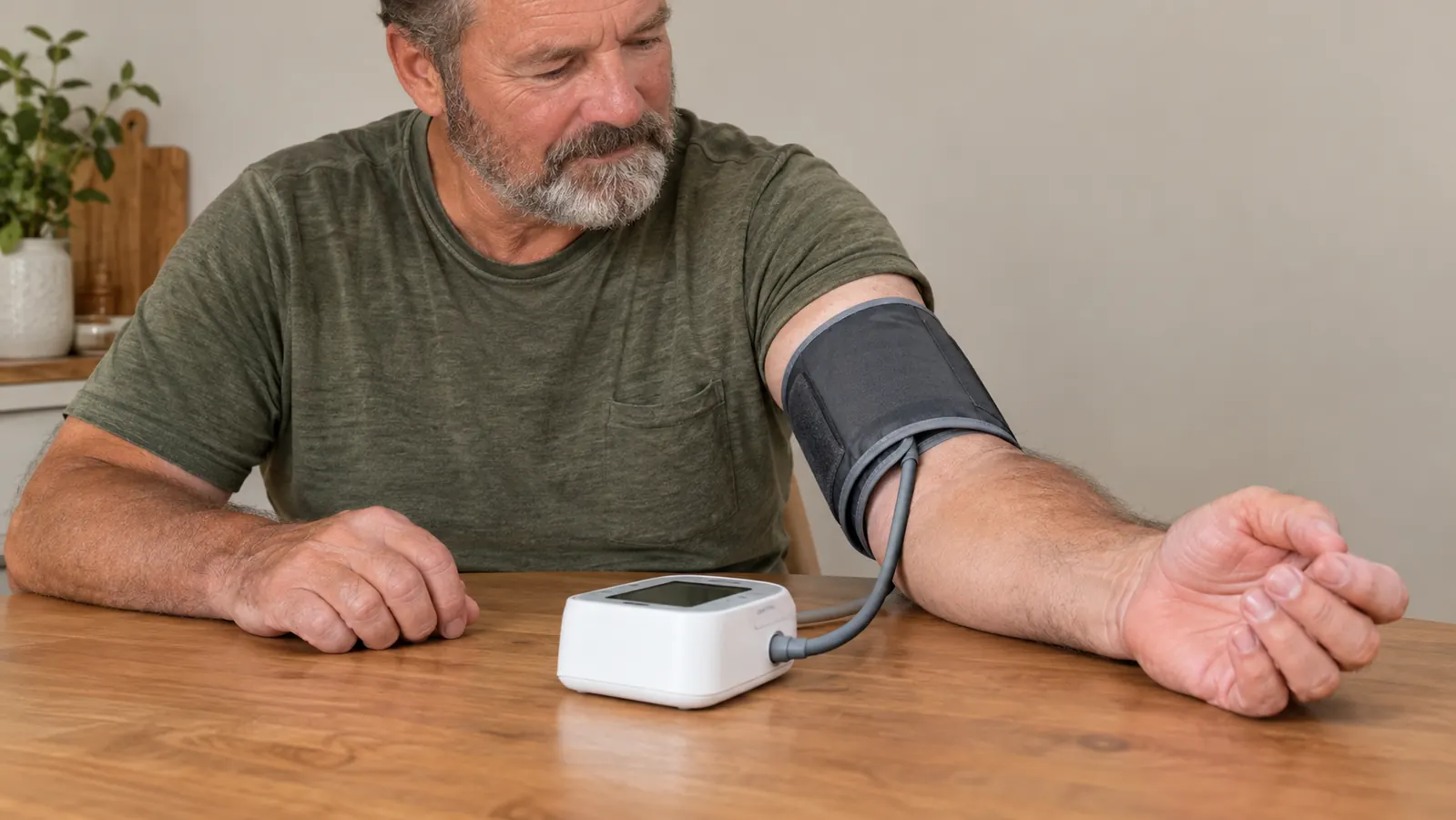
That is the part I want to be honest about, because it is easy to assume a cuff is a cuff. It is not. A cuff that does not sit snugly at heart level, with the tube running down the center of the arm, will give you readings that wobble for no real reason. Walt was not doing anything wrong. He was fighting a cuff that wanted two hands and a mirror. The Omron ComFit cuff is pre-formed, so it keeps its shape while you slide it on. That one difference changed the whole morning routine.
We bought the ComFit for two reasons. The first was that Walt found the original cuff fiddly to wrap by himself, and he kept putting it on too loose or too low. The pre-formed shape fixes that, because the cuff holds its curve while you slide your arm in. The second reason was simpler: I wanted each of us to have our own cuff. I kept using the original one that came with the monitor, and Walt got the ComFit. Sharing a monitor is fine, but sharing a cuff means adjusting the fit every single time. Two cuffs, each set for its owner, made the morning routine feel less like a negotiation.
The ComFit did not change Walt's numbers. It changed how easily he got a steady reading in the first place.
A cuff that goes on right the first time
Walt's morning readings got steadier once he stopped wrestling with the wrap. See today's price on Amazon for the Omron ComFit cuff.
Amazon Check Today's Price on Amazon →The Omron ComFit cuff, the HEM-FL31-B, fits upper arms from 9 to 17 inches and is compatible with Omron monitor models BP5250, BP7350, and BP7450. It comes with an air plug and an instruction manual. I mention the compatibility because that was the first thing I checked before buying. I did not want a second cuff that only worked with some other monitor. The ComFit works with the Bronze, which is the monitor Walt uses every morning, and that is the whole point of a spare cuff: it has to work with the thing you already own.
What surprised me was how much calmer the reading became. Not because the cuff changes anything about the measurement, it does not. A monitor measures; it never treats or lowers anything, and I do not want to imply otherwise. But a reading is only as good as the setup around it. When Walt's cuff sat in the same place every morning, at the same height, snug but not tight, the numbers stopped jumping around. He stopped redoing the reading. He stopped sighing at the table. He just sat down, wrapped it, and read.
Before the ComFit, Walt tried a generic, unbranded one-size universal cuff on the monitor for a few weeks. It slipped, and his readings were inconsistent. I am not going to name the brand, because the problem was not the brand, it was the idea of a universal cuff. A cuff that claims to fit everyone usually fits no one well. The Omron ComFit is sized, it says large on the box, and it covers the 9 to 17 inch range with a shape that actually holds. That is the difference between a cuff that works and a cuff that just exists.
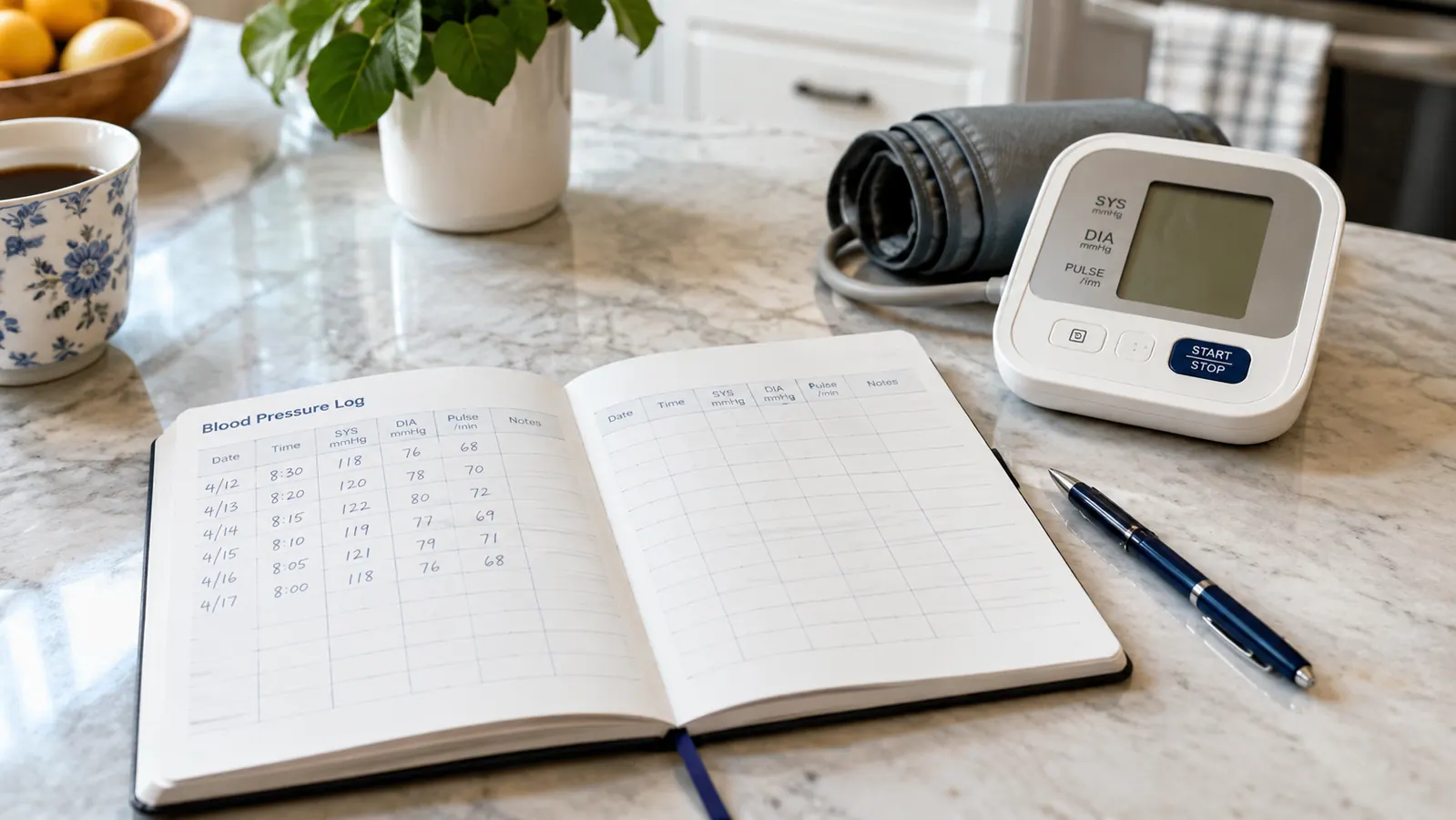
These days the rhythm of the morning is the same every day. Walt sits in the same chair, feet flat on the floor, arm resting on the table at heart level, and takes five quiet minutes before he presses start. The ComFit goes on in one smooth motion now. He writes his reading in the log book with his initials, and I do the same when it is my turn. The cuff did not make him a different person. It just took one small frustration out of a habit we both intend to keep.
What I'd Tell You If We Were Sitting at My Kitchen Table
If you are reading this because someone in your house is fighting with a cuff every morning, I would tell you this: check the fit first, not the numbers. Sit in the same chair, feet flat, arm resting on the table at heart level, and take five quiet minutes before you press start. If the cuff is hard to wrap, or it slides, or it leaves a deep crease, that is a fit problem, not a you problem. A pre-formed cuff like the Omron ComFit removes one variable from the routine, and for Walt, that was the variable that mattered.
I would also tell you to keep the log. I fill in date, time, both numbers, pulse, and a short note, and I bring it to every appointment. Walt writes his own readings in the same book with his initials. The cuff made the readings easier to take, but the log is what made them useful. Your doctor interprets your numbers and decides on treatment. My job, and Walt's job, is simply to bring good, consistent readings to the table.
Make the morning reading easier for both of you
If you share a monitor, a second easy-wrap cuff can end the daily wrestling match. Check today's price on Amazon for the Omron ComFit cuff.
Amazon Check Today's Price on Amazon →