

My doctor asked me to keep a written log for a few weeks, and I will be honest. I grumbled. Phones can store numbers, so why did she want paper? Two and a half years later, that same paper log is still in my kitchen drawer, and it is the first thing I reach for before every appointment. I can tell you exactly why I kept it, and none of the reasons are the ones I expected.
I am Ruth, a 63-year-old retired librarian in Round Rock, Texas. I am not a nurse or a doctor, and nothing here is medical advice. I started taking readings at home after a routine checkup, and I kept the habit. The Blood Pressure Log Book is the paper log I use. These are the ten reasons I still fill it in by hand, twice a day, most days.
Give your readings a place to live.
Before I had the Blood Pressure Log Book, my numbers lived in a spiral notebook and then in my head, which is to say nowhere. This book is 110 pages of plain daily entries, and it is the reason my doctor can actually read my history at a glance.
Amazon Check Today's Price on Amazon →You can see the whole pattern at once
An app shows me a chart, but a paper page spread flat on the kitchen table shows me three weeks in one glance. I can run my finger down the page and spot the Tuesday spike without tapping through screens. I write the date and time on the left, then both numbers, my pulse, and a short note. When I lay two pages side by side, I can see what I ate, what I did, and what the cuff said, all in the same line of sight. That is the whole point of a log: the pattern, not the single reading.
Amazon Start your own pattern with the Blood Pressure Log Book →
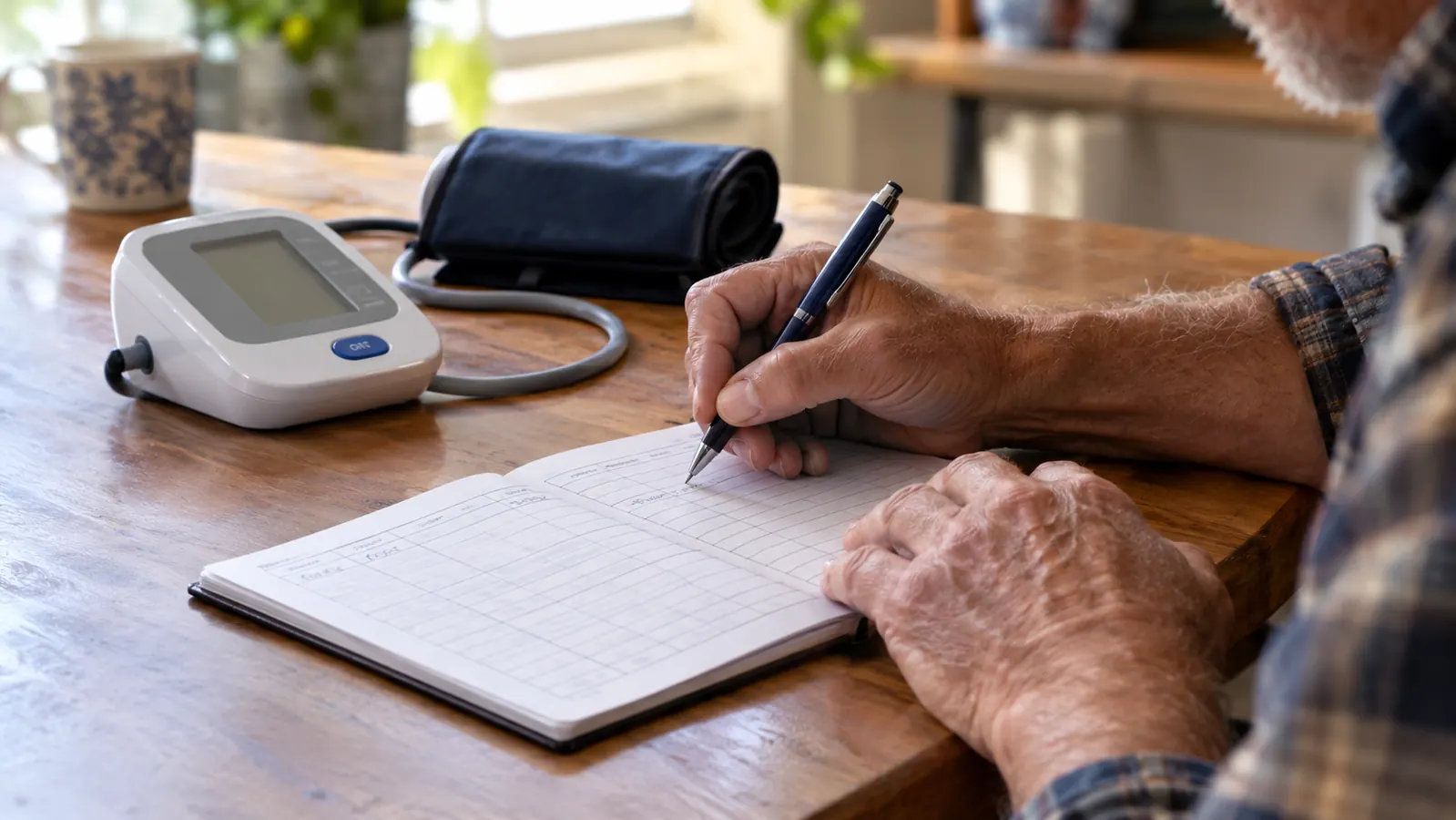
Writing it down makes the routine stick
The first few weeks I took readings whenever I remembered, which meant I mostly forgot. The pen changed that. Sitting in the same chair, feet flat, arm resting on the table at heart level, five quiet minutes first, that is the ritual, and the empty space on the page is the reminder. If I skip a morning, the blank spot stares at me the next day. A paper log does not nag, but it does keep score, and for me that gentle pressure worked better than any notification.
Your doctor can actually read it
At my last appointment I handed over the log, and my doctor flipped through it page by page, asking about the weeks with the high notes. I did not have to describe anything from memory or scroll through my phone. The dates, the times, the numbers, they were all right there in my handwriting. My doctor is the one who interprets the readings and decides what to do. My job is to bring a record, and paper is the easiest record to hand across a desk.
It still works when the phone dies
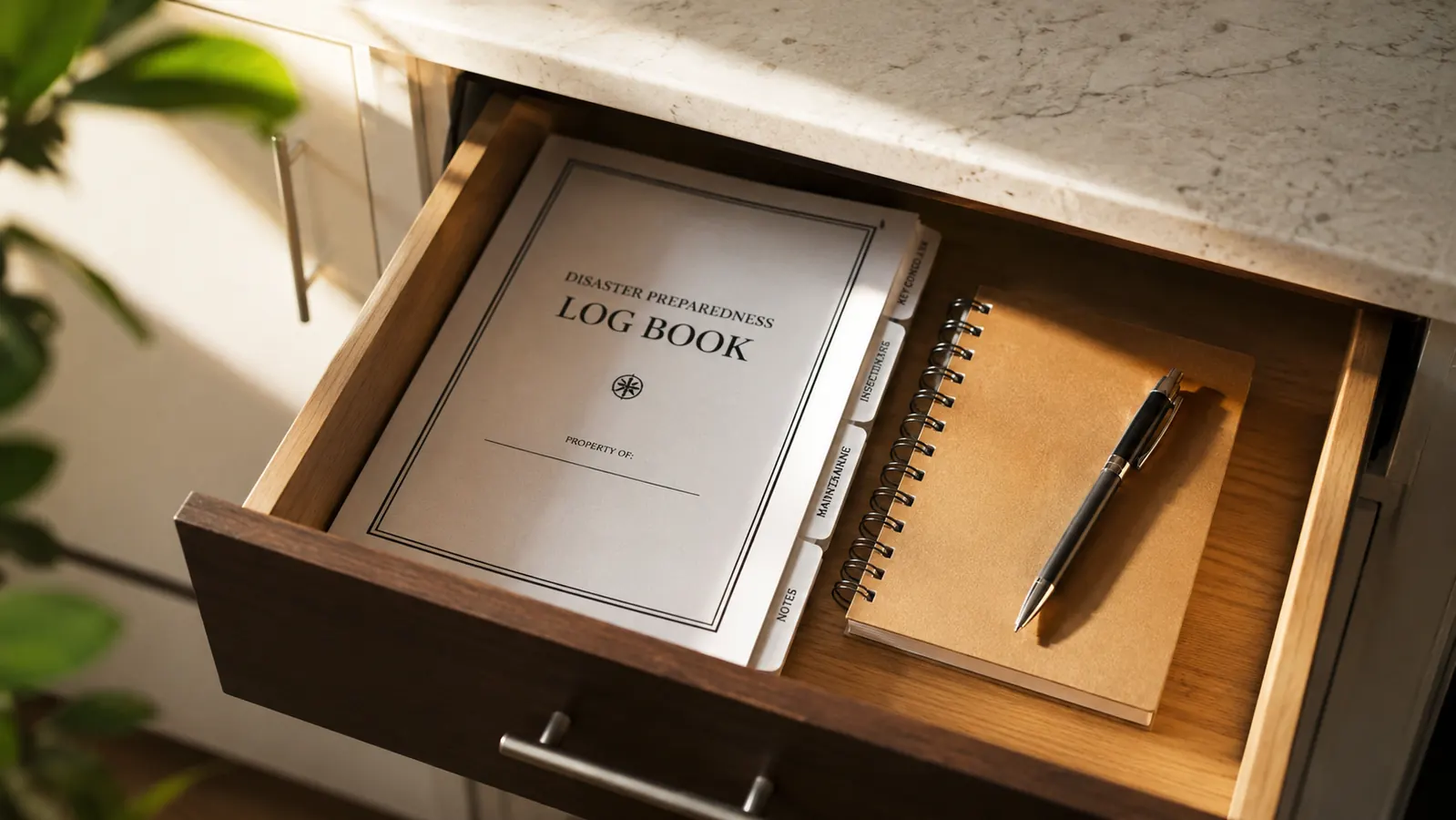
My phone has died at the worst moments, the app has logged me out, and the sync on my phone only works when everything cooperates. The Blood Pressure Log Book has never once failed to open. It lives in the kitchen drawer, it needs no charger, no update, no password. When I travel to San Antonio to see my daughter, it comes with me in my bag, and it works exactly the same in a hotel room as it does at my kitchen table.
A short note explains the numbers
I write a short note with every entry. Slept badly. Salty restaurant dinner the night before. Rushed, took the reading anyway. Those notes are worth more than the numbers, because they give the numbers a context. A high reading after a bad night is information, not a scare. A calm reading on a Sunday morning is information too. The log turns random numbers into a story, and the story is what my doctor and I can actually talk about.
No menus, no logins, no sync errors
I am not afraid of technology. I use the Withings app most evenings and I like it. But the app asks me to tap, to wait, to check that it synced. The paper log asks for none of that. Pen, page, done. It takes me about thirty seconds after the reading. In the morning, when I am still half asleep and the coffee is brewing, thirty seconds of pen on paper is exactly the right amount of effort. The Blood Pressure Log Book is the lowest-friction part of my whole routine.
It shows the difference between home and the office
My doctor asked for home readings in the first place because office readings run high for a lot of people. The waiting room, the white coat, the whole production, it all adds up. A written log lets you see that difference for yourself. I bring my home readings to every appointment, and my doctor can compare them with the office reading taken that same day. That comparison only works if the home readings are written down, consistently, over weeks, not just the one number I happen to remember.
The whole household can use one book
Walt takes his own reading on the Bronze most mornings, and his readings go in the same book, a line below mine, with his initials in the note. One book, one drawer, one place to look. I do not have to remember which app has which person's history or whether his numbers made it onto my phone. The Blood Pressure Log Book is not fancy, but it is organized, and for a retired librarian, organized is the whole battle.
It turns a vague worry into plain facts
Two and a half years ago, a checkup showed readings higher than my doctor liked, and I did what most people do: I worried vaguely. The log fixed that. Once I started writing down the numbers twice a day, I had facts instead of feelings. I could see that most mornings were fine, that the high readings clustered around stressful weeks, and that I had something concrete to bring to my doctor. A written log will not lower anything on its own. It just gives you and your doctor the truth to work with.
A full page is its own quiet reward
This sounds small, but it is the reason I kept going. When I finish a page in the Blood Pressure Log Book and start a fresh one, I feel the same thing I felt at the end of a school year: a clean, honest record of something I actually did. The habit started because my doctor asked. It continues because the book gives me a place to keep the habit. Two and a half years of entries is just paper and ink, but it is also proof that I showed up twice a day and paid attention.
What I'd Skip
Honestly? If you are not going to take readings on a regular schedule, skip the paper log and save yourself the drawer space. A log only earns its place if you fill it in, and a half-empty book is just a book. I would also skip any log that makes you hunt for where to write, with cramped boxes and too many columns. The Blood Pressure Log Book is plain on purpose: I write the date, the time, both numbers, my pulse, and a short note, and I am done. And if you know yourself well enough to admit you will never pick up a pen, use the app instead. The best log is the one you actually keep, paper or not.
Two and a half years of entries is just paper and ink, but it is also proof that I showed up twice a day and paid attention.
Start the habit tonight, one page at a time.
The Blood Pressure Log Book is 110 pages, six by nine inches, light enough for the kitchen drawer and plain enough to actually use. If you are taking home readings, give them a place to live. Check today's price on Amazon and write down your next reading before you forget it.
Amazon Check Today's Price on Amazon →