

About two and a half years ago, a routine checkup showed readings higher than my doctor liked. She did not panic, and she did not hand me a prescription. She asked me to take readings at home twice a day, morning and evening, for a few weeks, and to bring her a log when I came back. I said yes without thinking much about it, the way you do in a paper gown. Then I got home, opened the kitchen drawer, and realized I had no real way to keep that log.
I tried a spiral notebook first. It worked the way a spiral notebook always works, which is to say it did not work for long. The columns wandered, the dates got skipped, and I could never tell which reading went with which morning. After three weeks the notebook was a mess, and I did not want to hand it to anyone.

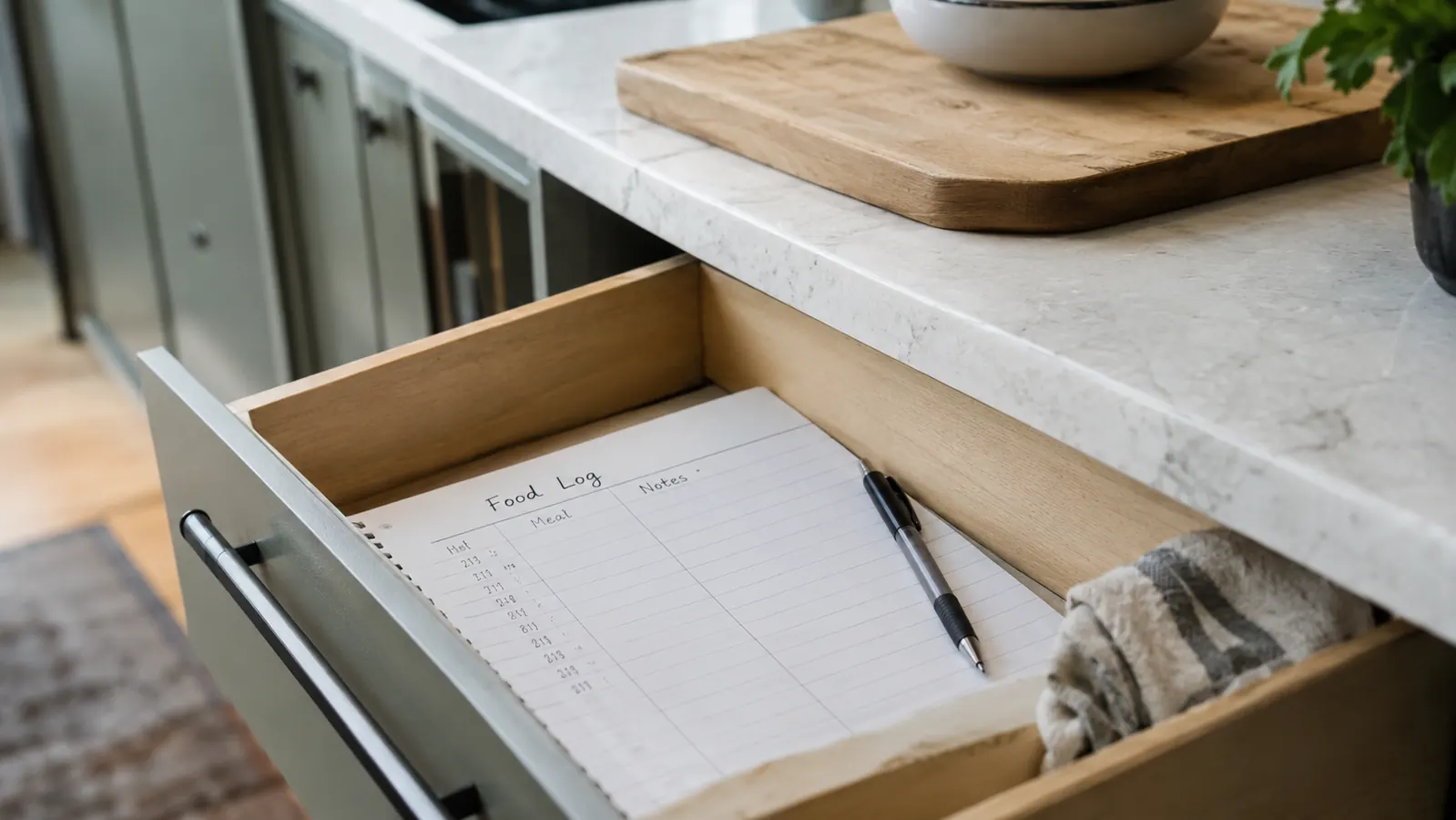
What I needed was something plain and consistent, and that is exactly what the Blood Pressure Log Book turned out to be. It is a simple daily log, 110 pages, about six by nine inches, light enough to live in the kitchen drawer. Each page has room for the date, the time, both numbers, my pulse, and a short note. Nothing fancy, and that is the point.
I started using it the way I used to set up a classroom at the start of the year. Same chair, same time, same routine, and I do not let myself skip it. Mornings I sit at the kitchen table, feet flat, arm resting on the table at heart level, after five quiet minutes. I take the reading, I write it down before I do anything else, and I put the book back in the drawer. Evenings are the same, and the paper log is the part I never skip. The phone apps are handy, but the book is what I reach for first.
The log book did not lower a single reading. I want to be clear about that. A monitor measures, and a log records. Neither one treats anything. But the log changed how I paid attention, and that changed the whole habit.
The log book did not lower a single reading. It just made the readings worth taking.
The plain little log book that made the habit stick
The Blood Pressure Log Book is a simple daily log with room for the date, the time, both numbers, your pulse, and a note. 110 pages, easy to keep in a kitchen drawer, easy to bring to an appointment.
Amazon Check Today's Price on Amazon →Walt started using it too, which I did not expect. He takes his own reading most mornings on the upper-arm monitor with the ComFit cuff, and he writes it in the same log book with his initials. He never wanted an app on his phone. His readings sync to mine, but the book is what he trusts.
The cuff story is worth telling because it explains why the log matters. Walt's arm measures about fifteen and a half inches, and the cuff that came with the monitor fits that just fine. The problem was never fit. He found the original cuff fiddly to wrap by himself and kept putting it on too loose or too low, which gave him readings that bounced around. He tried a generic one-size cuff for a few weeks, and it slipped. Then we bought the ComFit cuff, which goes on right more consistently, and gave each of us our own. I kept the original. The readings steadied, and the log book is where you can see that steadiness on paper.
Before I had my own monitor, I used the pharmacy kiosk a handful of times. It was fine for a quick check, but there was no way to keep the readings, and the cuff never felt quite right. That is part of why the log matters. A reading you cannot write down and compare is a reading you cannot use.
What I write in the log has changed over time. At first it was just the numbers and the time. Then I added a short note. Slept badly. Walked first. Ran to the store. Felt fine. My doctor reads those notes as closely as she reads the numbers. A reading after a bad night tells a different story than one after a quiet morning, and the note is what tells her which story it is.
The Blood Pressure Log Book replaced the spiral notebook about eighteen months ago, and it has been in the kitchen drawer ever since. I bring it to every appointment. It is 110 pages, which lasts a few months at our pace, and each time one fills up I buy the same book again. That is the highest compliment I can pay a kitchen-drawer tool.
What I'd Tell You If We Were Sitting at My Kitchen Table
Here is what I would tell you, plain and simple. You do not need a complicated system. You need a monitor that fits you, a consistent place to sit, and a log you will actually keep. Take the reading the same way every time. Five quiet minutes first, feet flat, arm at heart level. Write it down before you do anything else. If you are just starting, give yourself two weeks before you judge anything. The first readings are often the strangest, because you are still learning the routine. After a few weeks the numbers settle into a pattern, and the pattern is what your doctor wants to see. Do not fret over one high number. Look at the pattern, and bring that pattern to your doctor. Your doctor is the one who interprets the numbers and decides on treatment. I am not a doctor and I do not pretend to be one. A monitor measures, a log records, and neither one lowers anything. What the Blood Pressure Log Book did for me was make the whole routine feel manageable, and that is what kept me doing it.
Bring a clean log to your next appointment
The Blood Pressure Log Book is simple, easy to keep in a kitchen drawer, and easy to bring along. If you are taking readings at home, this is a tidy way to keep them all in one place.
Amazon Check Today's Price on Amazon →