
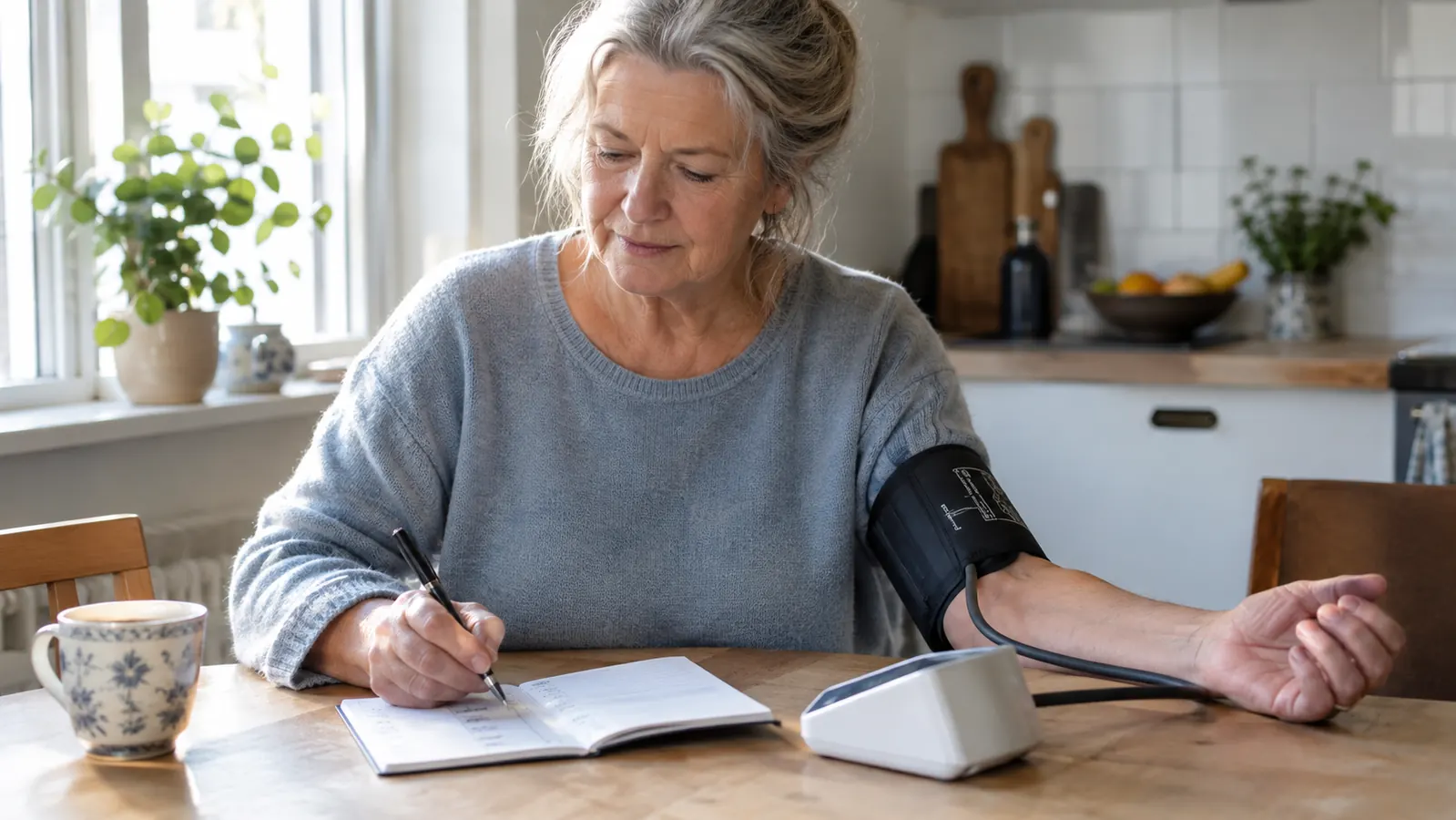
I started checking my blood pressure at home about two and a half years ago, after a routine checkup at my doctor's office. The numbers that day were higher than my doctor liked, and she asked me to take readings at home twice a day for a few weeks and bring her a log. I started with a spiral notebook. It worked, but it was messy, and I kept forgetting which page had which week. Then I found the Blood Pressure Log Book, a plain paper record with room for everything my doctor wanted to see. Eighteen months later, it is still the first thing I reach for at the kitchen table.
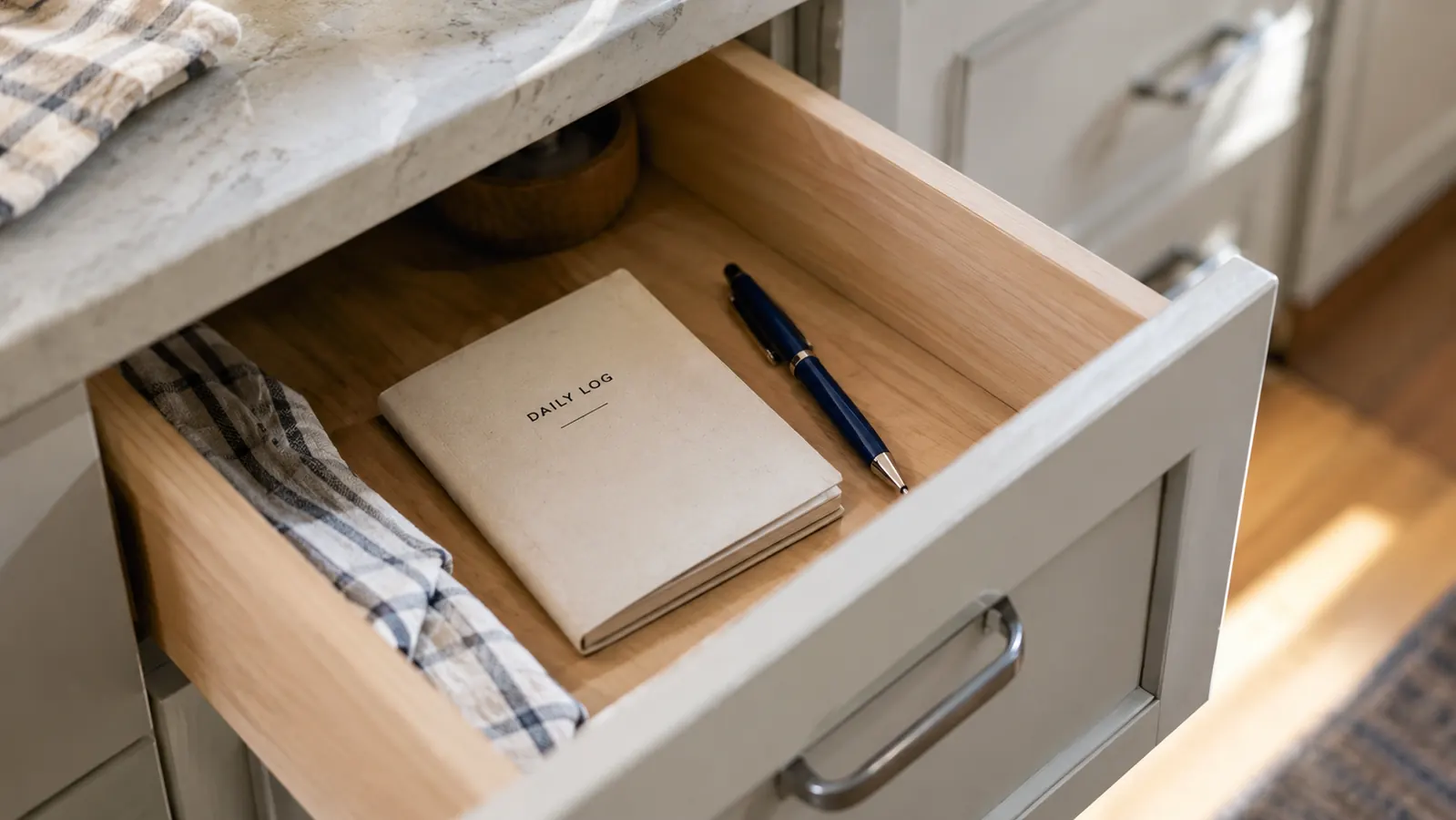
The Blood Pressure Log Book is not a gadget. It has no screen, no app, no alarm, and nothing to charge. It is a 110 page book, about 6 by 9 inches, thin enough to slide into a kitchen drawer. The pages are a comfortable size to write on at the table, and the whole thing weighs about 6 ounces. That is exactly why it works for me. A monitor measures your blood pressure. It does not treat it, and it does not lower anything. The log just keeps the record straight so you and your doctor can see what is actually happening.
The Quick Verdict
The plainest tool in my blood pressure routine, and the one I trust most when I walk into the appointment.
Amazon Check Today's Price →The paper log I have kept for eighteen months
110 pages, room for date, time, both numbers, pulse, and a short note. It lives in my kitchen drawer and goes with me to every appointment.
Amazon Check Today's Price on Amazon →How I've Used It
Every morning I sit in the same chair at our kitchen table, feet flat on the floor, arm resting on the table at heart level. I give myself five quiet minutes first, no coffee, no phone. Then I take a reading with my OMRON Bronze upper-arm monitor. I write the date, the time, both numbers, my pulse, and a short note in the Blood Pressure Log Book. The note might say 'before coffee' or 'after a walk' or 'felt rushed.' Those notes turned out to be more useful than I expected.
In the evening I usually take a second reading with my Withings BPM Connect, because it syncs to my phone automatically. I still write that reading in the paper log too. Sometimes I take one reading on each monitor, one right after the other, just to compare. The paper log holds both. I have kept this up for about eighteen months with this book, and before that I used a spiral notebook. The Blood Pressure Log Book replaced the notebook because it gave me a consistent place for every reading, and because my doctor can actually read it. My husband Walt has borrowed my monitor a few times to check his own numbers. He uses the larger cuff, and he has never wanted a log of his own. That is fine. The book is mine, and it goes with me to every appointment.
Consistency matters more than perfection. My doctor did not ask me to get perfect readings. She asked me to take readings the same way each time and write them down. The Blood Pressure Log Book makes that easy because the form is always the same. I do not have to decide what to record. I just fill in the blanks.
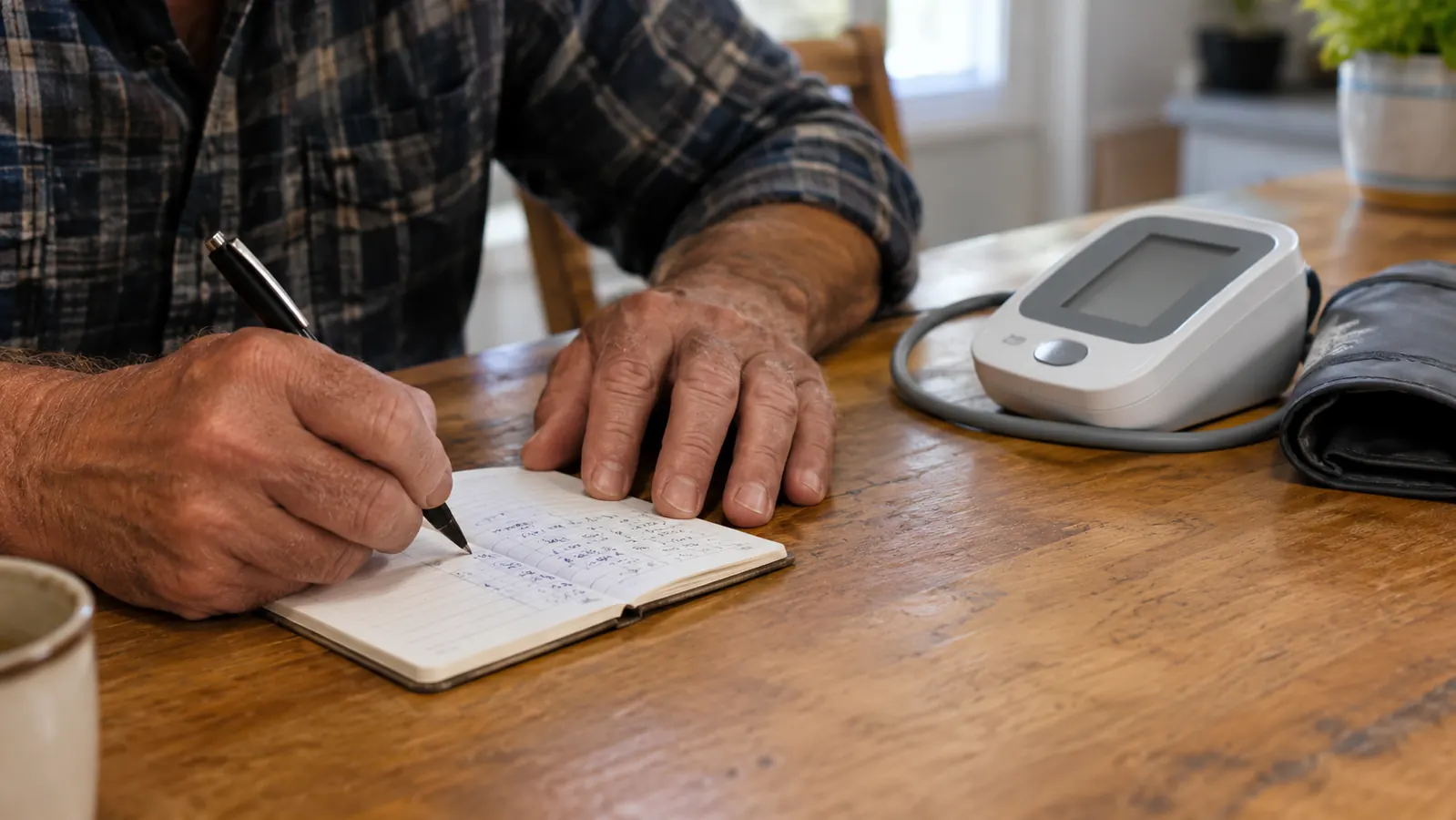
What the Blood Pressure Log Book Actually Is
The listing calls it a simple daily blood pressure log, and that is what it is. It has 110 pages, and I buy the same book again each time one fills up, which at our pace is every few months. The book measures 6 x 0.26 x 9 inches and weighs about 6 ounces, so it is light and thin. It is in English, independently published, and it has an ISBN. None of that matters much at the kitchen table. What matters is that each entry has a place for the date, the time, both numbers, the pulse, and a short note.
I fill in the date myself, because I started mid-month and did not want to waste pages. The layout is the same on every page, which sounds dull and turns out to be the whole point. After a few weeks, I can find any morning in about five seconds. I do not have to remember which notebook page I used or decode a cramped margin. It is all in the same place, in the same order, every single day.
If you would rather have your readings on your phone, a paper log is not the only option. I use the Withings app myself, and there is a separate article on this site [comparing paper logs and phone apps](/bp-log-book-vs-phone-apps). The short version is that I keep both. The app is convenient. The paper log is what I actually bring to my doctor.
Why a Paper Log Works Better Than I Expected
I expected the paper log to feel like homework. It does not. It feels like the one part of monitoring that is completely in my control. The monitor can give me a number I do not like. The log does not care. It just holds the record, and over time the record is what shows the pattern.
There is a real reason to keep a written log even if you also use an app. A written log forces me to look at the numbers twice: once on the monitor screen and once as I write them down. That second look is when I notice things. I notice that my morning readings are higher when I skip my quiet five minutes. I notice that a string of rushed evenings shows up as a string of higher numbers. There is a separate article on this site about the [reasons to keep a written blood pressure log](/10-reasons-to-keep-written-blood-pressure-log), and the short version is that writing things down makes you actually see them.
The book also works when the phone is not around. It does not need a charge. It does not need Wi-Fi. It does not need me to remember a password. It lives in the kitchen drawer, and it is always ready. Some evenings I take my reading, write it down, and never look at my phone until morning.
What Annoyed Me
I want to be honest, because no product is perfect. The Blood Pressure Log Book does not add up averages for you. If I want to know my average for the week, I add the numbers myself on a scrap of paper. That takes about a minute, and it is not hard, but it is something the book simply does not do.
There is no graph in the copy I have. Some people like to see their readings plotted on a chart, and this book does not include one. I make my own simple graph on a blank page when I want to see a trend, but if you want that built in, you would need to look at an app or a different kind of log.
The pages are also repetitive, which is the point, but it can feel monotonous. And because the book is thin, it can slide around on the table if you do not hold it with one hand while you write. I solved that by keeping a pen right next to it. None of these are dealbreakers. They are just the honest tradeoffs of a simple paper product.
How I Bring It to the Doctor
Every few months I bring the Blood Pressure Log Book to my appointment. My doctor flips through the pages, looks at the mornings and evenings, and asks about the notes. 'What was going on that week?' she might say, and I can tell her, because I wrote it down. That conversation is the whole reason I started keeping a log in the first place.
I am not a doctor or a nurse, and I want to be clear about one thing: your doctor is the one who interprets your numbers and decides whether anything needs to change. A monitor measures your blood pressure. It does not treat it. A log book does not treat it either. What the log does is give you and your doctor a reliable record, and that record makes the conversation at the appointment much more useful.
The notes are the part I would not have predicted. 'Slept badly.' 'Drove to San Antonio to see our daughter.' 'Walt had the monitor first.' Those small notes explain a single high reading better than any number can. Without them, a high reading looks like a problem. With them, it looks like what it usually is: one rough morning.
Alternatives I Considered
Before I settled on the Blood Pressure Log Book, I tried a spiral notebook, which worked but got messy. I also considered using only my phone. I have used the Withings app for about a year, and I like it for seeing trends on a screen. But the app does not sit in my doctor's hand the way a paper log does, and I found that I was more careful with a pen than with a thumb.
I looked at other paper logs too. Some have graphs. Some have spaces for medication. Some are bigger, with more pages. I chose this one because it is small, thin, and simple, and because the layout matches exactly what my doctor asked me to track: date, time, both numbers, pulse, and a note. I also thought about printing my own blank log pages. That works, but a printed sheet never seemed to survive the drawer as well as a real book. If you want to compare the options, the article on [paper logs versus phone apps](/bp-log-book-vs-phone-apps) covers the tradeoffs in more detail.
The book has held up fine. It lives in the kitchen drawer, gets pulled out at least twice a day, and rides in my bag to every appointment. Even when a copy is nearly full, the pages stay put, the cover lies flat, and nothing has come loose. I cannot speak for every copy, but mine has taken real daily use and still looks presentable.
What I Liked
- 110 pages, so it lasts a long time
- Thin and light at 6 x 0.26 x 9 inches and about 6 ounces
- Simple layout with room for date, time, both numbers, pulse, and a note
- Easy for a doctor to read at a glance
- No batteries, no charging, no app to update
Where It Falls Short
- No averages or graphs built in
- The same layout on every page can feel repetitive
- Paper only, so there is no sync and no electronic backup
- It can slide on the table if you do not hold it while writing
My doctor can flip through four months of mornings and evenings in about thirty seconds. That alone is worth the two minutes a day.
Who This Is For
The Blood Pressure Log Book is for someone who wants a simple, reliable record and does not want to depend on a phone to keep it. It is for people who sit down twice a day, take a reading, and want one consistent place to put it. It is for anyone whose doctor has said, 'bring me a log of your home readings.' This book does exactly that.
It is also for people who like writing things down. I am a retired librarian, and I have always been a list maker. Writing the numbers by hand helps me remember them. If you are the same way, you will probably like this book as much as I do.
Who Should Skip It
If you want your readings to appear on your phone automatically, skip this book and use an app or a monitor that syncs. The Blood Pressure Log Book is paper, and it will never be anything else. If you want averages, graphs, and trends drawn for you, an app will do that better. If you check your blood pressure only once a month, a 110 page book is more than you need, and a single sheet of paper would do.
And if you are looking for something that will lower your blood pressure, no log book will do that. A monitor measures. A log records. Your doctor interprets. Nothing in this article is medical advice, and I would never tell you that a notebook or an app can replace your doctor. What the book can do is make the record clear enough that your doctor can actually use it. If you want to share your readings with your doctor electronically, a paper log will only slow you down.
Keep the log your doctor can actually read
The Blood Pressure Log Book has 110 pages, a simple layout, and room for date, time, both numbers, pulse, and a note. It has been on my kitchen table for eighteen months, and it goes with me to every appointment.
Amazon Check Today's Price on Amazon →