
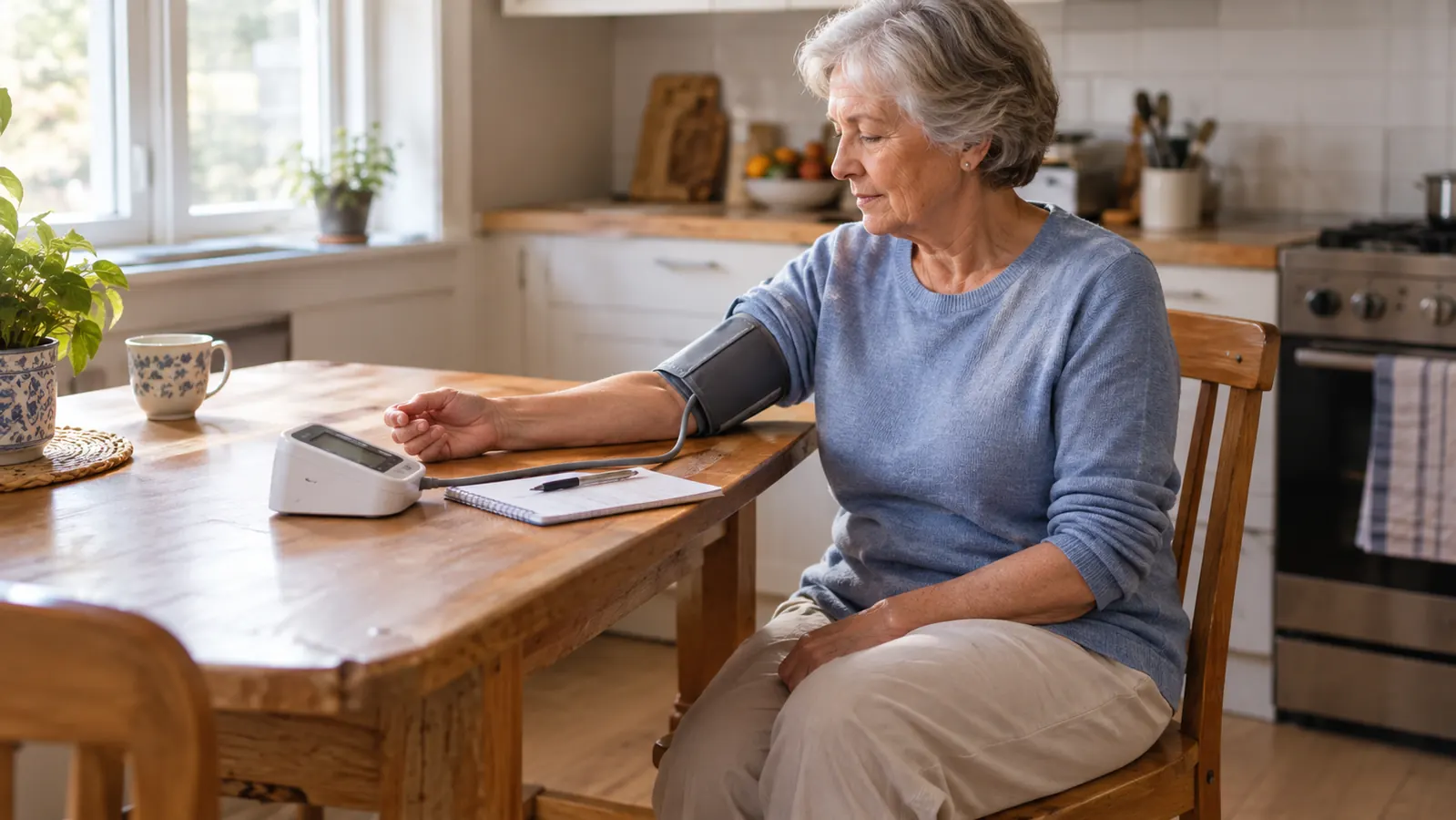
Here is the thing nobody tells you when your doctor asks you to check your blood pressure at home: a log is only as useful as the readings in it. You can buy the nicest monitor on the shelf, take readings every morning, and fill a whole notebook, and your doctor will still squint at the pages and ask what time you took them, which arm you used, and whether you were sitting or standing. I learned this the slow way. When my doctor asked me to take readings at home twice a day and bring in a log, I started with a spiral notebook and a hand-me-down wrist monitor, and I did it all wrong for weeks. The numbers were there. They just did not mean much.
What finally worked was boring, which is exactly why it worked. I take readings at the same kitchen table, in the same chair, at about the same times, and I write each one down in the Blood Pressure Log Book before I do anything else. That book, a simple paper log with 110 pages, now lives in the kitchen drawer, and it goes with me to every appointment. My doctor reads it, nods, and asks questions about the short notes I add to each entry. This guide is how I got from a messy notebook to that. It is not medical advice. I am a retired librarian, not a nurse. Your doctor is the one who reads your numbers and decides what they mean. My only job here is to help you keep a log they will actually use.
Keep the log your doctor will actually read
The Blood Pressure Log Book is the 110-page paper log I bring to every appointment. It weighs about 6 ounces, fits in the kitchen drawer, and takes two minutes a day. If you are going to track blood pressure at home, this is the easy way to make the record useful.
Amazon Check Today's Price on Amazon →Step 1: Take the reading the same way every time
A log is only as trustworthy as the readings in it, and readings are only trustworthy if the setup is the same every day. I did not understand this at first. I would take a reading standing in the kitchen while the coffee brewed, or sitting on the edge of the bed first thing in the morning, and then wonder why the numbers bounced around. They bounced because I was measuring different situations, not because anything was wrong.
My doctor gave me a simple list, and I have followed it for two and a half years. Sit in the same chair at the table. Feet flat on the floor. Back supported. Rest your arm on the table so the cuff sits at heart level. Then sit quietly for five minutes before you press the button. No coffee right before, no talking, no phone in your hand. It sounds fussy. It takes ten minutes total, and it is the difference between a log your doctor can use and a log that just looks busy. Your doctor may have their own list, and theirs beats mine. The point is to pick one routine and repeat it.
The other half of consistency is the cuff. My husband Walt needs the larger cuff, the 9 to 17 inch one, because his upper arm measures about fifteen and a half inches, so we keep that one on the kitchen monitor for him. My own arm is about eleven inches, so the standard cuff fits me. If the cuff is too loose or too tight, the reading is not honest, and neither is the log.
Step 2: Take readings at the same times, morning and evening
My doctor asked me to take readings twice a day for a few weeks: once in the morning and once in the evening. I still do it, because the pattern is what turned out to be useful. One reading tells you almost nothing. A morning and evening reading, every day, for weeks, tells your doctor how your blood pressure behaves across the day, and that is a much better picture than the single number from a checkup visit.
Pick times that survive real life. I take the morning reading after breakfast but before I get busy, and the evening one after dinner while I am still sitting at the table. If a morning gets away from me, I skip it rather than squeeze in a rushed reading, because a rushed reading is worse than no reading. It goes in the log looking like a real measurement when it is really just noise. My doctor would rather see a missing time than a misleading number.
Twice a day sounds like a lot until it becomes the wallpaper of your day. The morning reading is done before the day gets loud. The evening one happens while the dishes are still on the table. Neither one takes ten minutes of my full attention. What surprised me is how quickly the routine stopped feeling like a chore. After the first month I stopped negotiating with myself and just did it, the way you brush your teeth without arguing about it.
Step 3: Write down more than the two numbers
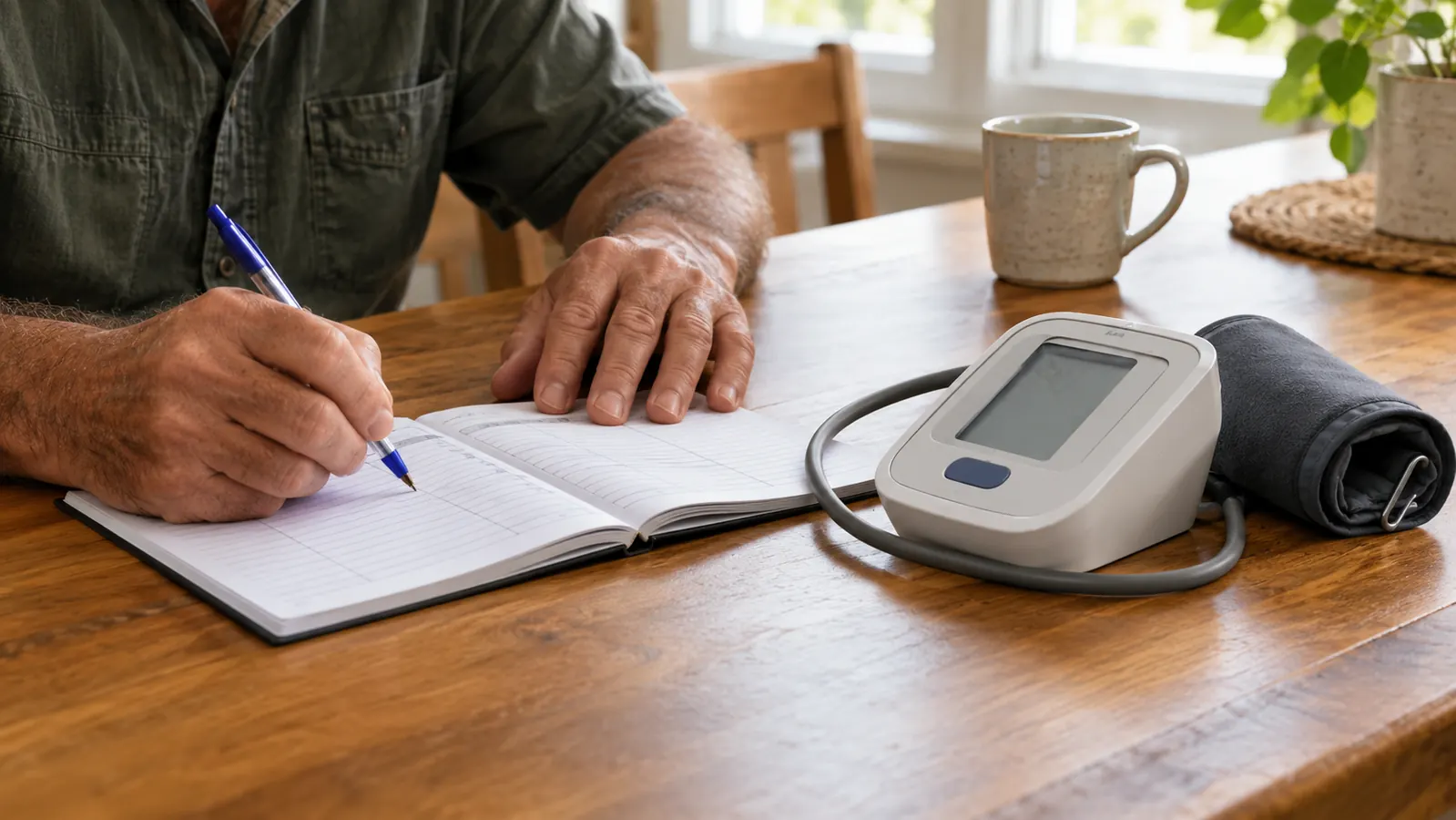
The whole point of the Blood Pressure Log Book is that it gives you a simple daily record. I write the date, the time, the top number, the bottom number, my pulse, and one short note. The note is the part people skip, and it is the part my doctor actually reads. A note can be one word: 'coffee', 'rushed', 'quiet', 'slept badly'. It explains the reading without you having to remember the morning three weeks later.
Here is an example from my own book. On a normal day my numbers sit in their usual range. On the morning after a bad night of sleep, the top number was higher, and my note said 'slept badly'. When my doctor saw that, she did not treat it as a problem. She treated it as context. Without the note, that reading would have looked alarming. With it, it looked like exactly what it was: one rough morning.
I also note which arm I used, because I use the same arm every day, and if I ever switch, the doctor needs to know. I date every entry, because a log without dates is just a list of numbers. And I write the entry while I am still sitting at the table, before I get pulled into the day. Two minutes, pen to paper, done. The book has 110 pages, which works out to about three and a half months if you use a page a day, so I replace it a few times a year.
Step 4: Keep the log where you will actually use it
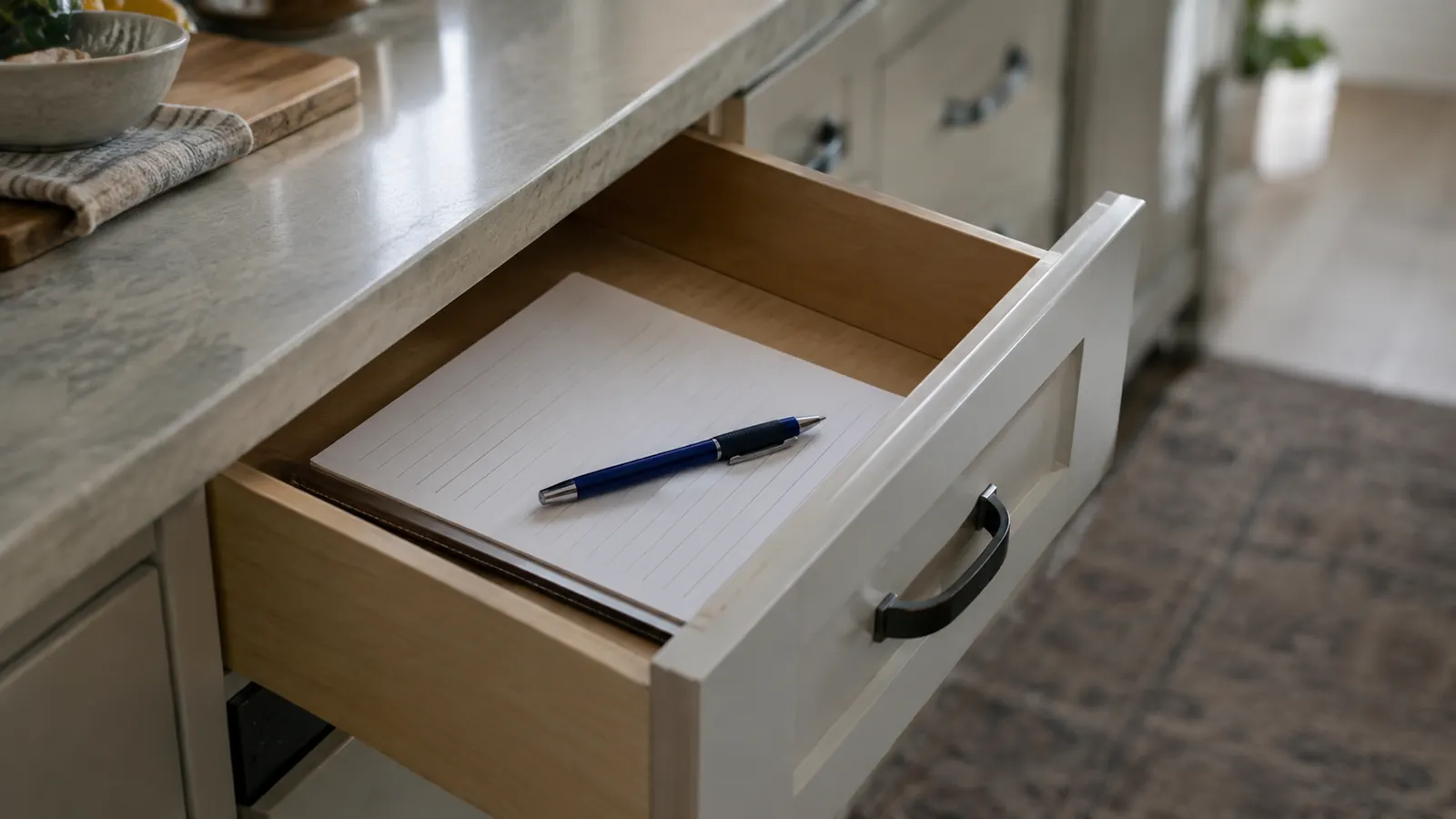
The best log in the world is worthless if it lives in a drawer across the house. Mine lives in the kitchen drawer, right next to the table where I take my readings. The monitor sits on the table. The Blood Pressure Log Book sits in the drawer, with a pen on top. When I finish a reading, the book is already there, and the entry takes less time than the reading did.
This sounds too simple to matter, but it is the single biggest reason my habit stuck. When the book was a spiral notebook in the bedroom, I forgot it half the time. When I moved the book to the kitchen, I stopped forgetting. Put the book where the monitor is. If your monitor lives on the nightstand, keep the book on the nightstand. Match the book to the routine, not the other way around.
One small detail made a difference: I keep a pen in the drawer with the book. Not a nice pen, just a ballpoint that always works. When the book and the pen live together, the entry happens in the same motion as the reading. The moment I have to go hunting for a pen is the moment the habit starts to wobble. Make it easy on your future self and the log will take care of itself.
Step 5: Bring the log to your appointments and let your doctor read it
This is the part that makes all the other steps worth it. I bring the Blood Pressure Log Book to every appointment, and I hand it over without tidying it up first. Doctors have seen messy logs. They have seen logs with coffee rings and crossed-out entries. What they want is the real record, not a clean copy you rewrote to look better. If a reading looks odd, leave it in and let the note explain it.
What I do not do is interpret the log myself. I do not decide that a high week means something terrible, and I do not decide that a good week means I can stop taking readings. A monitor measures. It does not treat, and it does not diagnose. I bring the pages, I answer questions about the notes, and my doctor is the one who decides what the pattern means and whether anything needs to change. That division of labor has kept me calm for two and a half years, and it will keep your log useful too.
The first time I handed over a full log, my doctor spent more time on it than I expected. She looked at the notes more than the numbers, asked about the 'slept badly' mornings, and told me to keep doing exactly what I was doing. That was the moment I understood the real job of the log. It is not to impress anyone. It is to give your doctor a true picture of your ordinary weeks, so the two of you can talk about what is actually happening instead of guessing from one visit.
What Else Helps
Two things helped me stick with the habit beyond the book itself. The first is the app on my phone. I use the Withings monitor most evenings, and the reading syncs to the app automatically, so I can see the trend over weeks without flipping pages. I still write the same reading in the paper log at the same time. The two records agree, and the paper one is the one I bring to the doctor. They do different jobs, and if you are weighing a paper log against a phone app, the tradeoffs are worth knowing before you pick one. The app is good at showing me the shape of the last month. The paper log is good at showing my doctor the details behind that shape. I would not want to give up either one.
The second helper is the wrist monitor I keep in my travel bag. When I visit my daughter in San Antonio, the upper-arm monitor stays home, and the wrist unit comes along so I do not lose the habit. It is not my favorite way to measure, and at home I prefer the upper-arm monitor, but a travel reading is better than a gap in the log.
One more thing: if someone else in the house uses the same monitor, make sure each entry says whose reading it is. Walt takes his own reading on the kitchen monitor most mornings, using his pre-formed ComFit cuff because it is easier for him to put on by himself. If you share a monitor, keep your entries separate and label them, so the doctor is never guessing whose numbers they are looking at. It is a small thing, but it keeps the record honest, and an honest record is the whole point of this exercise.
The note is the part people skip, and it is the part my doctor actually reads.
Two minutes a day, and a record your doctor will actually use
The Blood Pressure Log Book is the simple 110-page paper log that has gone with me to every appointment for a year and a half. It is not fancy. That is exactly why it works. If you are taking readings at home, this is the easiest way to make them count.
Amazon Check Today's Price on Amazon →